Mounjaro Side Effects: Common, Rare and When to Call Your Doctor
The most common Mounjaro side effects are nausea, diarrhoea, constipation, vomiting and indigestion, usually mild to moderate and mostly in the first weeks and after each dose increase. A few rare signs, like severe abdominal pain that does not settle, need a doctor straight away.
ALTRcare Medical Team
Clinical Editorial
Most Mounjaro side effects are stomach-related: nausea, diarrhoea, constipation, vomiting, indigestion and reduced appetite. In the trials they were usually mild to moderate and happened mostly during the first weeks and after each dose increase. Serious side effects are rare, but you should know the few warning signs that mean you call a doctor the same day.
Is Mounjaro safe? For the right person, under a doctor’s supervision, it is an approved medicine with a well-studied safety profile. It is prescription only (Schedule H) because some people should not take it, and because the dose needs to be stepped up carefully.
Key takeaways
- Common: nausea, diarrhoea, constipation, vomiting, indigestion, burping, reduced appetite. Usually mild and temporary.
- They tend to peak in the first weeks and for a few days after each dose increase, then ease.
- Rare but serious: pancreatitis, gallbladder problems, dehydration leading to kidney strain, severe allergic reactions.
- Red flag: severe abdominal pain that does not go away, with or without vomiting. Seek care the same day.
- Small meals, less fried food on dose day and plenty of fluids (chaas, thin lassi, water) help most people.
How common are Mounjaro side effects?
In SURMOUNT-1, the main weight-loss trial, nausea was reported by 31.0% of people on the 15 mg dose against 9.5% on placebo. Diarrhoea was reported by 23.0% (vs 7.3%), vomiting by 12.2% (vs 1.7%) and constipation by 11.7% (vs 5.8%). Lilly reported these effects as generally mild to moderate and usually occurring during the dose-escalation period.
Put simply: most people get some stomach symptoms at some point, most of those are manageable, and only a small share stop the medicine because of them. The lower doses you use in the first months generally cause fewer symptoms than 15 mg.
Common side effects and what helps
Mounjaro nausea
Nausea is the one most people ask about. It is usually worst in the first 1 to 3 days after an injection and in the first week or two after a dose step. It comes from food leaving the stomach more slowly, so overfilling the stomach is the main trigger.
- Eat small meals, and stop at the first sign of fullness. Half a roti less is fine.
- Keep dose day and the day after light: khichdi, dal-chawal, curd rice, idli, poha, soups.
- Avoid heavy fried food (pakoras, puris, samosas, bhature) and very rich gravies on dose day.
- Sip fluids through the day instead of large glasses with meals.
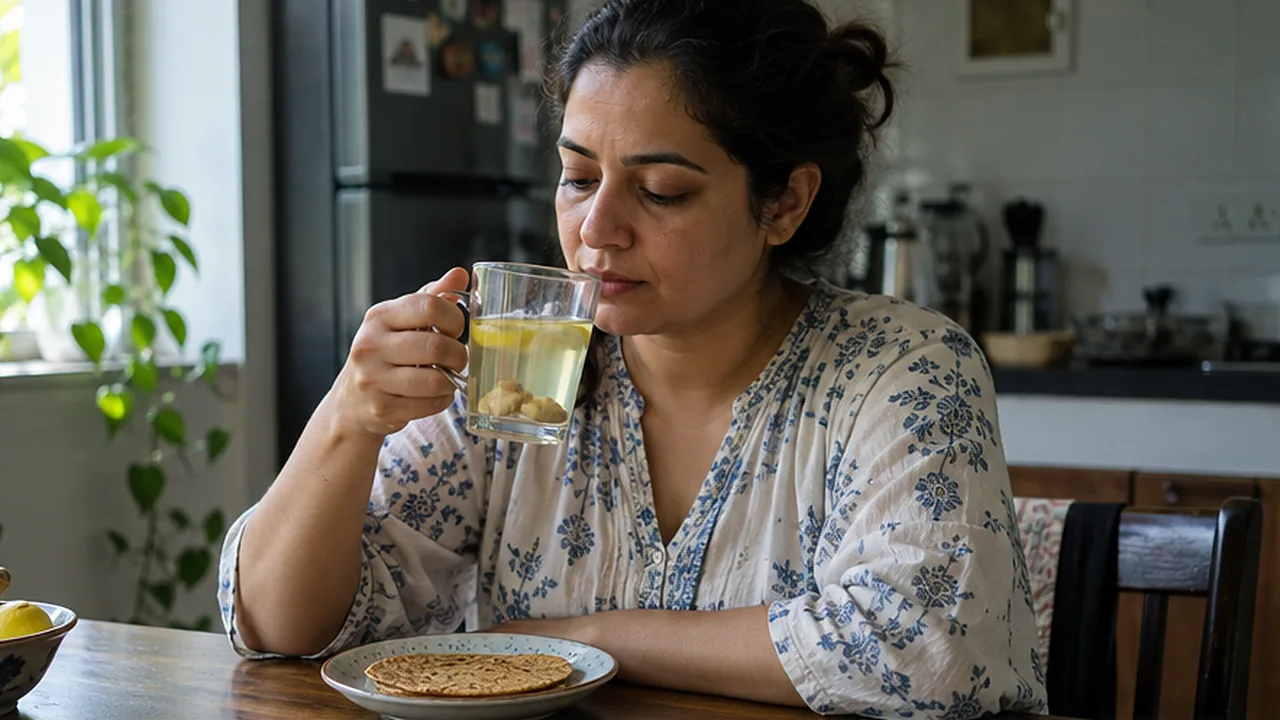
- Ginger (adrak) tea, jeera water or a few sips of nimbu pani help some people.
- Do not lie down straight after eating. A short slow walk helps.
Diarrhoea
Usually short-lived. Keep up fluids and salts: chaas (buttermilk), thin lassi, nimbu pani with a pinch of salt, coconut water, ORS if it is frequent. Go easy on very spicy, oily or high-sugar food until it settles.
Constipation
Common because you are eating and drinking less. Drink more water than feels natural, add fibre gradually (vegetables, fruit, whole dal, isabgol if your doctor agrees) and keep walking.
Indigestion, acidity and burping
Sulphur burps and reflux are common in the early weeks. Smaller dinners, eating 2 to 3 hours before bed and cutting fizzy drinks helps. More in acid reflux and burping on GLP-1.
Tiredness, low appetite, hair shedding
Eating much less can leave you tired, especially if protein and fluids drop. Some people notice hair shedding a few months into rapid weight loss, which is usually temporary. For a full Indian food plan, read managing GLP-1 side effects with an Indian diet.
The simple dose-day routine
Light dinner the night of the injection, a glass of chaas or thin lassi with lunch the next day, water bottle on your desk, no fried food for 48 hours. Most patients who follow this find the first weeks far easier.
Side-effect help on WhatsApp
Every ALTRcare tirzepatide plan includes a doctor, a nutritionist and WhatsApp side-effect support. Start with a free online doctor consultation.
Rare but serious side effects
These are uncommon, but they are why Mounjaro needs a doctor. Know them so you can act quickly.
- Pancreatitis: severe, persistent pain in the upper abdomen, sometimes spreading to the back, with or without vomiting.
- Gallbladder problems (gallstones, inflammation): pain in the upper right abdomen, fever, yellowing of the skin or eyes, pale stools. Rapid weight loss raises this risk. See GLP-1 and gallstones.
- Dehydration and kidney strain: from repeated vomiting or diarrhoea. Signs include very little urine, dark urine, dizziness on standing, extreme thirst.
- Severe allergic reaction: swelling of the face, lips or throat, difficulty breathing, widespread rash.
- Low blood sugar: mainly if you also take insulin or a sulfonylurea (like glimepiride or gliclazide). Shakiness, sweating, confusion.
- Thyroid warning sign: a lump or swelling in the neck, hoarse voice, trouble swallowing. Tell your doctor.
Seek medical care the same day if
You have severe abdominal pain that does not go away, you cannot keep fluids down for a day, you are passing very little urine, your skin or eyes turn yellow, or you have swelling of the face or trouble breathing. Do not wait for your next scheduled consultation.
Who should not take Mounjaro
- Personal or family history of medullary thyroid carcinoma, or MEN 2 syndrome.
- Pregnancy, planning pregnancy, or known allergy to tirzepatide.
- Extra caution with a history of pancreatitis, gallbladder disease, severe stomach or bowel disease, or diabetic retinopathy.
If you take oral contraceptive pills, they can be less reliable for 4 weeks after starting Mounjaro and for 4 weeks after each dose increase. Use a backup method such as condoms during those windows. The full list is in who should not take GLP-1 medication.
When to message your doctor
Not everything is an emergency, but you should not just put up with it either. Message your doctor if:
- Nausea or vomiting stops you eating or drinking normally for more than a day or two.
- Diarrhoea or constipation lasts more than a few days.
- Side effects are worse after a dose increase and not easing by the end of that week.
- You missed a dose and are unsure what to do.
- You are starting a new medicine, planning a pregnancy or scheduled for surgery.
Often the fix is simple: staying on the current dose for longer before stepping up, adjusting meals, or short-term medicine for nausea. That is a decision for your doctor, not something to manage by skipping doses on your own.
How ALTRcare handles side effects
Your prescribing doctor is one of Dr. Mujeeb Afzal (MD, DM Endocrinology), Dr. (Major) Bhavesh Talera (MD, MRCP (UK), FRCP, internal medicine), Dr. Archana Rathi (diabetologist, ex-Registrar Bombay Hospital, PCOS and women’s health) or Dr. Snigdha Sehgal (MD Internal Medicine). All four are senior specialists. Before prescribing, they check for the conditions above.
The tirzepatide 3-month plan is ₹34,999 (₹11,666 a month) and includes three doctor consultations timed to each dose step, a nutritionist with a personalised Indian diet plan, WhatsApp support and side-effect help, and cold-chain delivery. GST is included. If you want unlimited doctor follow-ups on WhatsApp and blood reports, Premium Care is ₹47,999 for 3 months.
Talk to a senior doctor first, free
A 15–20 minute video consultation, no payment to book. If medication is not right for you, you will be told plainly.
You can also book directly on the free online doctor consultation page. For how to inject correctly (which also reduces site reactions), see how to use the Mounjaro KwikPen.
Side-effect rates are from SURMOUNT-1 as reported by Eli Lilly (2022). This article is educational and not a substitute for medical advice.
Mounjaro® is a registered trademark of Eli Lilly and Company. Yurpeak® is marketed in India by Cipla. ALTRcare is not affiliated with either company.
Frequently asked questions
What are the most common side effects of Mounjaro?
Nausea, diarrhoea, constipation, vomiting, indigestion and reduced appetite. They are usually mild to moderate and happen mostly in the first weeks and after each dose increase.
How long does Mounjaro nausea last?
For most people it is strongest in the first 1 to 3 days after an injection and in the first week or two after a dose step, then eases. If it stops you eating or drinking, message your doctor.
Is Mounjaro safe?
For suitable patients under a doctor’s supervision, it is an approved medicine with a well-studied safety profile. It is not for people with a personal or family history of medullary thyroid cancer or MEN 2, or during pregnancy.
What are the signs of pancreatitis on Mounjaro?
Severe, persistent pain in the upper abdomen, sometimes spreading to the back, with or without vomiting. Stop the next dose and seek medical care the same day.
What should I eat to avoid nausea on Mounjaro?
Small, light meals such as khichdi, dal-chawal, curd rice or idli, especially on dose day. Avoid heavy fried food for a day or two after the injection, and sip fluids like chaas, thin lassi and water through the day.
Can Mounjaro cause low blood sugar?
The risk is low on its own. It is higher if you also take insulin or a sulfonylurea, so tell the doctor who manages your diabetes before you start, as those medicines may need adjusting.
Ready to take the next step?
Take the free 2-minute eligibility assessment. A doctor reviews it before anything is prescribed, with no obligation.
This article is for general educational purposes and is not a substitute for personalised medical advice. GLP-1 medications are prescription-only and not suitable for everyone. Always consult a qualified doctor before starting, changing, or stopping any treatment.