GLP-1 and Gallstones: The Side Effect Nobody Talks About (and How to Lower Your Risk)
Gallbladder issues show up in the fine print of every GLP-1 trial, and rapid weight loss itself is a known driver. Here's the honest risk picture, the symptoms to know, and what actually lowers your odds.
ALTRcare Medical Team
Clinical Editorial
Most GLP-1 side effect conversations stop at nausea and constipation. But sitting quietly in the safety data of every major trial is the gallbladder. It deserves an honest, unpanicked explanation, because the risk is real but modest, much of it comes from weight loss itself rather than the drug, and there are practical things that lower your odds.
What the data actually shows
In the STEP trials of semaglutide 2.4 mg, gallbladder-related events (mostly gallstones, called cholelithiasis) occurred in roughly 1.5 to 3% of participants, compared with around 1% or less on placebo. A 2022 meta-analysis in JAMA Internal Medicine pooling 76 trials found GLP-1 use was associated with a higher relative risk of gallbladder disease, but the absolute increase was small: in the ballpark of an extra 1 to 2 cases per 100 people treated, with higher doses and longer use carrying more of the risk.
Here's the nuance: weight loss itself is a driver
Rapid weight loss by any method, including dieting and bariatric surgery, is a well-established cause of gallstones. When you lose weight quickly, your liver pushes extra cholesterol into bile, and a quieter gallbladder empties less often, letting stones form. Studies of very-low-calorie diets and surgery report gallstone formation in a meaningful minority of patients. So part of the GLP-1 gallstone story isn't the molecule at all: it's the successful weight loss it produces. Slower, steadier loss with proper meals is protective, which is one more argument for the supervised titration approach over aggressive shortcuts.
Symptoms you should not ignore
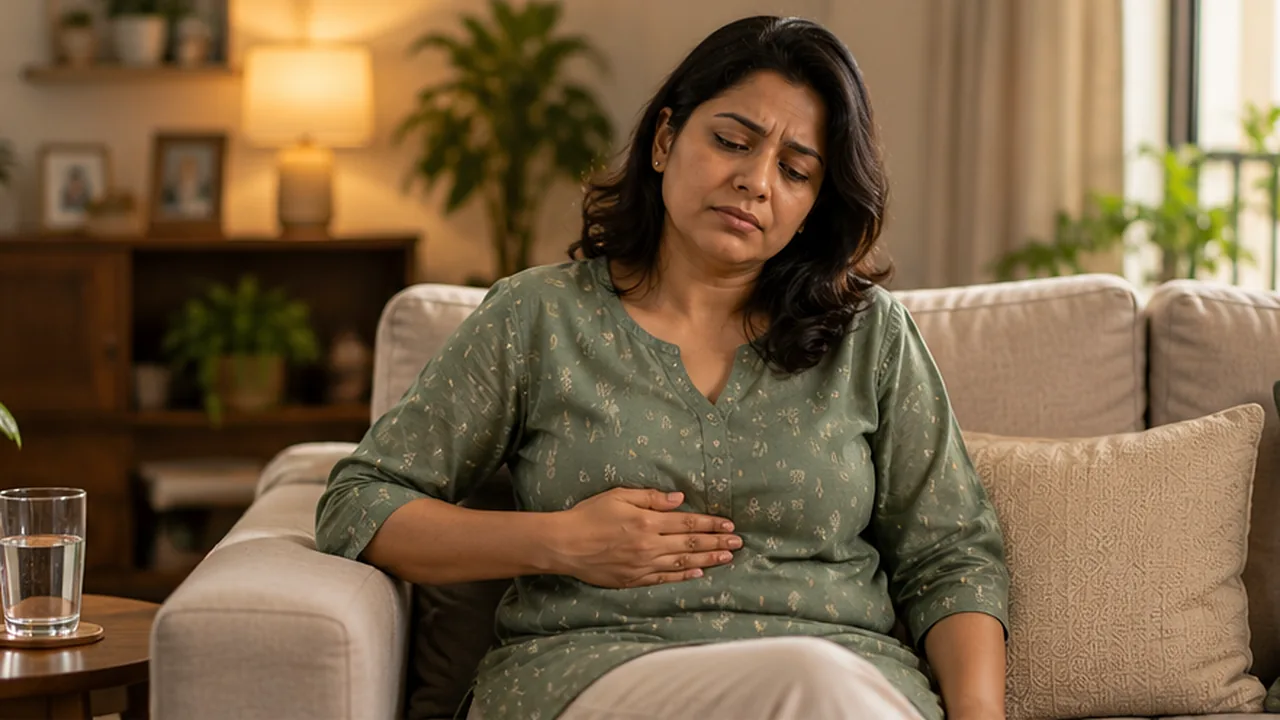
- Pain in the upper-right abdomen or centre of the belly, especially after fatty meals, lasting more than 30 minutes.
- Pain that spreads to the right shoulder or back.
- Nausea and vomiting paired with that pain (different from ordinary GLP-1 nausea, which comes without focal pain).
- Fever with abdominal pain.
- Yellowing of the eyes or skin, dark urine, or pale stools: these suggest a blocked duct and need urgent care.
Don't self-diagnose the pain away
Ordinary GLP-1 nausea is common. New, focal, right-sided pain after meals is not ordinary. If that happens, contact your doctor promptly. An ultrasound is a quick, cheap, painless way to check.
What actually lowers your risk
- 1Don't skip meals entirely: regular meals make your gallbladder contract and empty, which is exactly what prevents stones. Living on one meal a day works against you.
- 2Keep some healthy fat in your diet: fat is the trigger that empties the gallbladder. Ghee in moderation, nuts, seeds, and eggs help rather than hurt here.
- 3Lose at a steady pace: the supervised titration schedule exists partly for this. Crash-dieting on top of a GLP-1 stacks your risk.
- 4Stay hydrated and keep fibre up: both support healthy bile and digestion.
- 5Tell your doctor if you've had gallstones before or had your gallbladder removed: it changes the monitoring conversation (removal doesn't rule out GLP-1 use, but your doctor should know).
For the broader safety picture, see our guides on managing GLP-1 side effects with an Indian diet and blood tests before starting semaglutide.
A symptom you're not sure about?
Message our care team. Describing your symptom takes one minute and we'll tell you honestly whether it needs a doctor.
Key takeaways
- GLP-1s carry a modest gallbladder risk: roughly 1 to 2 extra cases per 100 treated in pooled trial data.
- Rapid weight loss by any method drives gallstones; some of the risk is the weight loss, not the molecule.
- Regular meals with some healthy fat keep the gallbladder emptying, which is protective.
- New right-sided pain after meals, fever with pain, or yellowing eyes need prompt medical review.
- Steady, supervised weight loss is the best structural protection.
Frequently asked questions
Do GLP-1s like semaglutide cause gallstones?
They're associated with a modestly higher risk. Trial data shows gallbladder events in roughly 1.5 to 3% of people on semaglutide 2.4 mg versus about 1% on placebo. Importantly, rapid weight loss itself, by any method, is a major driver of gallstones, so part of the risk comes from successful weight loss rather than the drug directly.
What are the warning signs of gallbladder problems on semaglutide?
Pain in the upper-right or central abdomen lasting over 30 minutes, especially after fatty meals; pain spreading to the right shoulder or back; nausea and vomiting with that pain; fever with abdominal pain; or yellowing of eyes or skin. Any of these warrant prompt medical review, and yellowing needs urgent care.
How do I prevent gallstones while losing weight on a GLP-1?
Eat regular meals rather than one meal a day (meals make the gallbladder empty, which prevents stones), keep some healthy fat in your diet, lose weight at a steady supervised pace, stay hydrated, and keep fibre up. Tell your doctor about any history of gallstones.
Can I take semaglutide if my gallbladder was removed?
Generally yes: not having a gallbladder removes the gallstone concern, though your doctor should still know your history. Some people without a gallbladder are more prone to loose motions, which can overlap with GLP-1 side effects, so mention it during your consultation.
Ready to take the next step?
Take the free 2-minute eligibility assessment. A doctor reviews it before anything is prescribed, with no obligation.
This article is for general educational purposes and is not a substitute for personalised medical advice. GLP-1 medications are prescription-only and not suitable for everyone. Always consult a qualified doctor before starting, changing, or stopping any treatment.