Acid Reflux and Burping on GLP-1: Why It Happens and What Helps
Heartburn, sulphur burps and a stuck feeling after meals are among the most common complaints in the first months. Almost all of it comes from one mechanism, and most of it is fixable.
ALTRcare Medical Team
Clinical Editorial
The short answer: GLP-1 medicines slow how fast your stomach empties. Food sits longer, pressure builds upward instead of moving downward, and the result is heartburn, burping and that heavy stuck feeling an hour after eating. It is common, it is usually worst in the first weeks and after each dose increase, and most of it responds to portion size and meal composition rather than more medicine.
Why a slower stomach causes reflux
Think of the stomach as a bag with a valve at each end. The medicine slows the exit valve. Everything you swallow spends longer in the bag, which raises pressure inside it. When that pressure meets a relaxed upper valve, acid travels up into the food pipe. That is heartburn. Trapped gas takes the same route, which is burping. The sulphur smell some patients describe comes from food fermenting longer than it normally would before moving on.
Two peaks to expect
Symptoms usually spike in the first two to three weeks on a new dose, then settle as your body adapts. If you feel it again a month later, check whether it lines up with a dose increase. Most patients are fine at their maintenance dose.
The fixes that actually work
- 1Cut portion size before you cut foods. The single biggest driver is volume. Two smaller meals beat one normal-sized one, even if the total is the same.
- 2Stop eating at comfortable, not full. On a GLP-1, the signal that you are full arrives late. If you eat to the point where you notice fullness, you have usually gone past it.
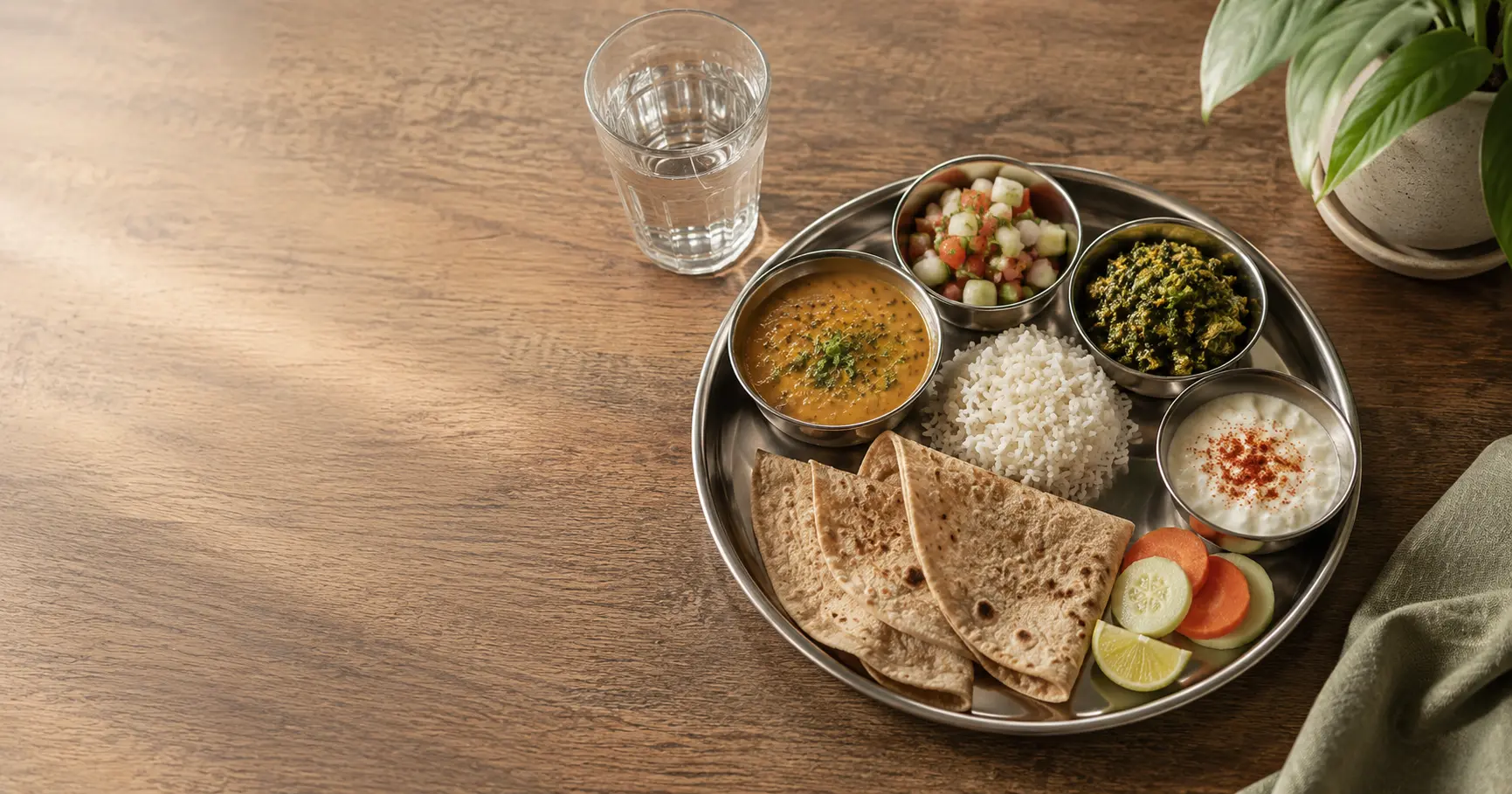
- 3Drop the oil. Fat slows the stomach further, and you are already on something that slows the stomach. Fried snacks, heavy gravies, cream and cheese are the usual culprits in Indian meals.
- 4Do not lie down for three hours after eating. Gravity is doing real work here. This alone fixes night-time reflux for many patients.
- 5Raise the head of your bed. Blocks under the bed legs work better than stacking pillows, which just bends your neck.
- 6Move your last meal earlier. A 9pm dinner on a slowed stomach is still sitting there at midnight. Aim for three hours before you sleep.
- 7Sip fluids between meals, not large volumes with them. Adding a litre of water to a full stomach adds to the pressure.
| Common trigger | Try instead |
|---|---|
| Deep-fried snacks, samosa, pakora | Roasted chana, makhana, boiled corn |
| Heavy cream or malai gravies | Tomato, curd or dal-based gravies |
| Large late dinner | Lighter dinner earlier, small protein snack if hungry |
| Strong tea or coffee on an empty stomach | Chai after food, or a smaller cup |
| Aerated drinks | Chaas, thin lassi, coconut water, plain water |
| Very spicy or very sour food when symptomatic | Milder versions during the first weeks of a new dose |
When medicine helps
If food and timing changes are not enough, antacids or a short course of an acid-reducing tablet may be appropriate, but that is a doctor's call, not a permanent self-prescription. Long-term acid suppression bought off the shelf is a common pattern in India and it has its own downsides. If you find yourself buying antacids every week, that is a signal to review the dose or the plan, not to buy more antacids.
See a doctor promptly if you have
Difficulty or pain on swallowing, food genuinely getting stuck, vomiting that will not settle, black or tarry stools, vomit that looks like coffee grounds, chest pain, or unexplained symptoms that are new and severe. These are not routine reflux and need assessment rather than a bigger dose of antacid.
What if it does not settle?
Persistent reflux is a legitimate reason to hold a dose increase longer, to step back to your previous dose for a few weeks, or in a small number of cases to reconsider the molecule. Patients with existing reflux or a hiatus hernia sometimes tolerate a slower titration much better. None of this is failure. Getting to a dose you can actually stay on for a year matters far more than reaching a target dose on schedule.
Care that answers questions like this
ALTRcare patients get a doctor-led plan, monthly follow-ups and same-day WhatsApp answers, not just a prescription. Take the free 2-minute assessment to see if a GLP-1 plan fits you.
Key takeaways
- Reflux and burping come from slowed stomach emptying, not from acid production going up.
- Portion size, less oil and an earlier dinner fix most cases.
- Do not lie down for three hours after eating; raise the head of the bed for night symptoms.
- Symptoms usually peak after a dose increase and settle within two to three weeks.
- Trouble swallowing, persistent vomiting or black stools need a doctor, not an antacid.
Frequently asked questions
Why do I get sulphur or egg-smelling burps on tirzepatide?
Food stays in the stomach longer than usual and ferments before moving on, which produces sulphur-containing gas. Smaller, lower-fat meals usually reduce it, and it tends to settle as you adapt to a dose.
Can I take antacids with semaglutide?
Occasional antacid use is generally fine and does not block the injection from working. If you need it most days, tell your doctor rather than continuing indefinitely on your own.
Does reflux mean I should stop the medicine?
Usually not. It more often means holding at your current dose for longer, adjusting meals, or slowing the titration. Stopping is a decision to take with your doctor.
Is heartburn on a GLP-1 dangerous?
Ordinary heartburn is uncomfortable rather than dangerous, but symptoms like difficulty swallowing, food sticking, persistent vomiting or black stools are different and need prompt medical review.
Will it go away eventually?
For most patients it improves substantially after the first few weeks on a given dose, and the maintenance phase is usually much easier than the titration phase.
Ready to take the next step?
Take the free 2-minute eligibility assessment. A doctor reviews it before anything is prescribed, with no obligation.
This article is for general educational purposes and is not a substitute for personalised medical advice. GLP-1 medications are prescription-only and not suitable for everyone. Always consult a qualified doctor before starting, changing, or stopping any treatment.