Semaglutide vs Tirzepatide: Which One Should You Take? A Doctor's Decision Guide for India (2026)
Tirzepatide loses more weight. Semaglutide costs a fraction as much since the March 2026 generics. Neither fact decides it on its own. Here is the head-to-head data, the price gap in rupees, and the ten situations that push a doctor one way or the other.
ALTRcare Medical Team
Clinical Editorial
Every week our doctors have this conversation. A patient has read that tirzepatide is stronger, seen that generic semaglutide now costs less than a gym membership, and wants to know which to start. The honest answer is that both work, the difference between them is real but smaller than the marketing suggests, and the right choice depends on six or seven things about you that no article can know. What an article can do is show you the data and the logic, so the conversation with your doctor starts from the right place.
Key takeaways
- In the only head-to-head trial, tirzepatide averaged about 20% weight loss and semaglutide about 14% over 72 weeks.
- After the March 2026 patent expiry, generic semaglutide costs roughly ₹1,300 to ₹4,200 a month at a pharmacy; tirzepatide is ₹13,000 to ₹26,000 and stays under patent until 2036.
- Semaglutide first for BMI under 32, tight budgets, first-time users, and anyone with cardiovascular disease. Tirzepatide first for BMI over 35, heavy insulin resistance, PCOS with high insulin, and people who stalled on semaglutide.
- Switching later is normal and well understood; starting on the cheaper drug is not a mistake you have to live with.
What the two drugs are
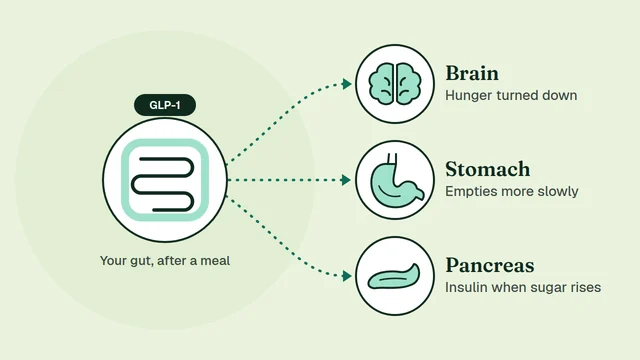
Semaglutide is a GLP-1 receptor agonist: it mimics one gut hormone that slows stomach emptying, raises fullness and lowers appetite. It is the molecule in Ozempic, Wegovy, Rybelsus, and since March 2026 in more than 40 DCGI-approved Indian generics including Alkem's Semasize, Dr. Reddy's Obeda, Zydus's Semaglyn and Natco's Semanat. Tirzepatide acts on two hormone receptors, GLP-1 and GIP. The GIP action improves how fat tissue and muscle respond to insulin, which is why it produces more weight loss and larger improvements in insulin resistance. It is sold in India as Mounjaro (Eli Lilly) and Yurpeak (Cipla, co-marketed), and no generic exists.
Head to head: what the trial showed
For years the comparison was between separate trials in different populations. SURMOUNT-5, published in the New England Journal of Medicine, put the two drugs against each other directly in adults with obesity but without diabetes, at the highest tolerated doses, for 72 weeks.
| Tirzepatide (to 15 mg) | Semaglutide (to 2.4 mg) | |
|---|---|---|
| Average weight loss | About 20% | About 14% |
| Lost 15% or more | About 65% of patients | About 40% of patients |
| Stopped for stomach side effects | Lower | Higher |
| Nausea, diarrhoea, constipation | Common on both, mostly during dose increases | Common on both, mostly during dose increases |
Two things to take from that. First, the gap is real: roughly six percentage points, which for a 90 kg person is about 5 kg more over a year and a half. Second, semaglutide's 14% is not a consolation prize. It is more than any medicine before this class ever delivered, and for most people with a BMI in the low 30s it is enough to move them out of the obese range.
The price gap in rupees
This is where India differs from every other market. Semaglutide's patent expired here on 20 March 2026 and generics arrived within weeks, at 50 to 80% below Novo Nordisk's price. Tirzepatide's Indian patent runs to 2036. So the cost difference is now the biggest single factor in the decision, and it did not use to be.
| Medicine | Starter dose | Typical maintenance dose |
|---|---|---|
| Generic semaglutide (Natco vial, Alkem, Dr. Reddy's, Zydus) | ₹1,300 to ₹2,500 | ₹2,500 to ₹4,200 |
| Ozempic / Wegovy (Novo Nordisk) | ₹5,660 | ₹7,800 to ₹16,400 |
| Mounjaro / Yurpeak (tirzepatide) | ₹13,125 (2.5 mg) | ₹16,400 to ₹25,800 (5 to 15 mg) |
Put the two tables together and the trade-off is explicit: tirzepatide buys roughly 5 kg more weight loss over 18 months for roughly ₹1,50,000 to ₹2,50,000 more in medicine. For some people that is obviously worth it. For most people with a BMI under 32 it is not, at least not as a first step.
The decision table
This is close to the mental checklist our doctors run. None of the rows is absolute; two or three pointing the same way usually settle it.
| Your situation | Usually start with | Why |
|---|---|---|
| BMI 23 to 32, first GLP-1 | Semaglutide | Enough effect to reach a healthy range; a fifth of the cost; full data on long-term use |
| BMI 35 or above | Tirzepatide | The extra 6 percentage points matter more the more there is to lose; fewer people plateau short of goal |
| Type 2 diabetes with HbA1c above 8 | Tirzepatide if affordable | Larger HbA1c reduction (about 2 points vs 1.5); more insulin sensitisation |
| Prediabetes or mild diabetes | Semaglutide | Both reverse prediabetes well; cost tips it |
| PCOS with high fasting insulin | Tirzepatide if affordable, else semaglutide | GIP action helps insulin resistance, the driver in PCOS; semaglutide still works and has more PCOS data |
| Known heart disease or prior heart attack | Semaglutide | Proven 20% reduction in major cardiovascular events (SELECT trial); tirzepatide's outcome data is still maturing |
| Very sensitive stomach, history of GERD or gallstones | Either, slow titration | Side effects are similar; tirzepatide had slightly fewer discontinuations in the head-to-head |
| Tried semaglutide, lost under 5% by month 4 at full dose | Switch to tirzepatide | Non-response to one is the clearest reason to try the other |
| Budget is the binding constraint | Semaglutide | A treatment you can afford for 12 months beats a stronger one you stop at month 3 |
| Planning pregnancy within a year | Semaglutide, then stop 2 months before | Both are stopped before conception; tirzepatide also weakens the pill |
Side effects: more alike than different
Both drugs cause the same family of effects, nausea, constipation, diarrhoea, reflux, tiredness in the first weeks, mostly during dose increases and mostly fading within two to four weeks of each step. Tirzepatide's reputation for being gentler comes from the head-to-head trial, where slightly fewer people stopped for stomach reasons, but the difference is small and the way the dose is raised matters more than the molecule. A doctor who holds a dose for an extra two weeks when you are struggling prevents more dropouts than the choice of drug does. Serious risks, pancreatitis, gallbladder disease, the thyroid tumour warning from rodent studies, are shared and rare. Our contraindications guide covers who should not take either.
Starting on one and moving to the other
The most common path we prescribe for a first-time patient with a BMI in the 30s is semaglutide for four to six months, then a review. Most reach their first goal and stay. Some plateau early or want more, and move to tirzepatide with a switch the doctor manages. That path costs less than starting on tirzepatide, and it does not cost anything in outcomes, because tirzepatide works just as well after semaglutide as before it. The reverse, tirzepatide first then semaglutide for maintenance, is also reasonable once the weight is off. See how doctors switch and whether to start with the cheaper one.
The one-line version
If you can comfortably afford tirzepatide and your BMI is 35 or higher, start there. Everyone else starts on semaglutide and lets the results, not the marketing, decide whether to step up.
Mounjaro with a doctor, at one price
ALTRcare's tirzepatide 3-month plan is ₹34,999 for all three doses (2.5 → 5 → 7.5 mg) of Mounjaro or Yurpeak, with 3 specialist consultations, a nutritionist and cold-chain delivery. The same three months of Mounjaro cost ₹50,156 at MRP. Start with a free online doctor consultation.
Not sure which is right for you?
Take the free 2-minute assessment. An ALTRcare doctor will look at your BMI, reports and budget in a free consultation and tell you which molecule they would start you on, and why.
Frequently asked questions
Is tirzepatide better than semaglutide for weight loss?
On average, yes. In the head-to-head SURMOUNT-5 trial, tirzepatide produced about 20% weight loss versus about 14% for semaglutide over 72 weeks. Both are highly effective; the gap is about six percentage points.
Which is cheaper in India, semaglutide or tirzepatide?
Semaglutide, by a wide margin. Generic semaglutide costs about ₹1,300 to ₹4,200 a month at a pharmacy since March 2026. Tirzepatide (Mounjaro, Yurpeak) costs ₹13,000 to ₹26,000 a month and is under patent until 2036.
Who should take semaglutide instead of tirzepatide?
First-time patients with a BMI under about 32, anyone with established heart disease, people with prediabetes or mild diabetes, and anyone for whom cost decides whether they can stay on treatment for a year.
Who should take tirzepatide instead of semaglutide?
People with a BMI of 35 or above, type 2 diabetes with HbA1c above 8, PCOS with marked insulin resistance, and people who lost under 5% on full-dose semaglutide.
Can I switch from semaglutide to tirzepatide?
Yes, it is common and well understood. Doctors usually review at month four to six on semaglutide and move patients who have plateaued or want more to tirzepatide without a washout.
Which has fewer side effects?
They cause the same side effects, mostly nausea and bowel changes during dose increases. Tirzepatide had slightly fewer discontinuations in the head-to-head trial, but how slowly the dose is raised matters more than which molecule.
Ready to take the next step?
Take the free 2-minute eligibility assessment. A doctor reviews it before anything is prescribed, with no obligation.
This article is for general educational purposes and is not a substitute for personalised medical advice. GLP-1 medications are prescription-only and not suitable for everyone. Always consult a qualified doctor before starting, changing, or stopping any treatment.