GLP-1 Explained: The Science Behind the Shot, Made Extremely Simple
How does a tiny weekly injection make you less hungry? It doesn't burn fat or shrink your stomach. It borrows a messenger your gut already makes. A doctor explains GLP-1 and GIP in plain words.

MD Internal Medicine, ALTRcare
You've heard about Ozempic. You've heard about Mounjaro. You've probably heard that people taking these medicines feel less hungry, eat smaller portions, and sometimes forget about food altogether.
But how does a tiny injection do all of that? Does it burn fat? Shrink your stomach? Switch off your appetite?
Well, not exactly.
To understand how these medicines work, you first need to know something fascinating about your body. Your stomach and your brain are constantly talking to each other. A big part of that conversation is carried by GLP-1, a hormone that is already present in your body!
1. Meet GLP-1: your body's natural “I'm full” messenger
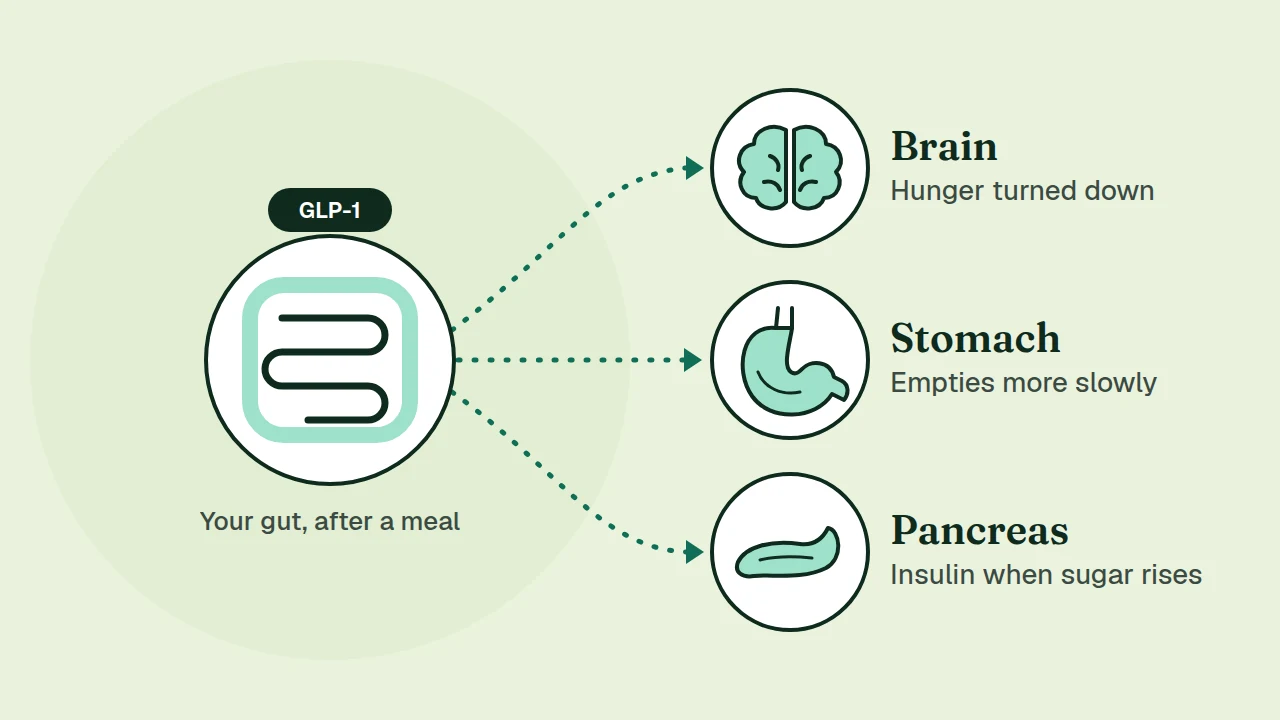
Imagine you've just finished a heavy lunch. Your stomach has received food. Your blood sugar starts to rise. And your body needs to figure out what to do next. So your gut releases a hormone called GLP-1 (glucagon-like peptide-1). GLP-1 helps deliver three important messages.
Message 1, to your brain: “We've eaten. You can turn down the hunger.”
GLP-1 acts on the appetite-regulating pathways in your brain, helping you feel satisfied and reducing the urge to keep eating.
Message 2, to your stomach: “Slow down.”
GLP-1 can slow the movement of food out of your stomach. Basically, it keeps you full for longer.
Message 3, to your pancreas: “Blood sugar is rising. Let's handle it.”
Your pancreas makes insulin, a hormone that helps move sugar from your blood into your body's cells. GLP-1 helps your pancreas release more insulin when your blood sugar is raised. It also helps reduce another hormone called glucagon, which can tell your liver to release more sugar.
Pretty clever, right? And here's the best part: your body already makes GLP-1 naturally.
2. Then why do we need GLP-1 medicines?
Because natural GLP-1 doesn't stay around for very long. Your body breaks it down within minutes, which is one reason the full feeling after a meal fades and hunger comes back a few hours later.
Medicines like semaglutide are designed to activate the same GLP-1 receptors for much longer, for days rather than minutes, which is why a single injection once a week is enough. They help your brain receive stronger, longer-lasting signals that regulate hunger and fullness.
That is why some people notice that:
- They feel satisfied with smaller portions.
- They don't feel hungry as often.
- They have fewer constant thoughts about food.
- They find it easier to stop eating when comfortably full.
That last experience is sometimes called reduced “food noise”.
3. Wait, then what's GIP? And why does Mounjaro work differently?
Now that you've met GLP-1, it's time to meet its teammate: GIP. Another complicated name: glucose-dependent insulinotropic polypeptide. One of its main jobs is helping your pancreas release insulin when blood sugar rises.
Here's where things get interesting. Ozempic (semaglutide) activates GLP-1 receptors. Mounjaro (tirzepatide) activates both GLP-1 and GIP receptors. This is why tirzepatide is called a dual GIP/GLP-1 receptor agonist. In simple words? One medicine activates two different hormone pathways.
| Medicine | Brands in India | Acts on |
|---|---|---|
| Semaglutide | Ozempic, Wegovy, and generics such as Semasize and Obeda | GLP-1 |
| Tirzepatide | Mounjaro, Yurpeak | GLP-1 and GIP |
Research shows that tirzepatide can produce substantial weight loss and improvements in blood sugar. In the head-to-head SURMOUNT-5 trial, people on tirzepatide lost about 20% of their body weight over 72 weeks, against about 14% on semaglutide. How much of that extra effect comes specifically from GIP is still being studied.
And remember: two hormone pathways don't automatically mean the medicine is right for everyone. That's something for me, as your doctor, to decide with you. Our full comparison is semaglutide vs tirzepatide in India.
Key takeaways
- GLP-1 is a hormone your gut already makes after you eat.
- It carries three messages: to the brain (less hunger), the stomach (empty more slowly) and the pancreas (more insulin when sugar is high, less glucagon).
- Natural GLP-1 lasts minutes; semaglutide works on the same receptors for days, so one weekly injection is enough.
- Tirzepatide (Mounjaro, Yurpeak) acts on GLP-1 and a second hormone, GIP. Which medicine suits you is a doctor's decision.
Coming up next
So, what's up with all the nausea, bloating, burping and constipation everyone keeps talking about? Are these side effects something to worry about, or simply a result of how GLP-1 medicines work? We'll break it down in the next article. Until then, our guide to managing GLP-1 side effects on an Indian diet covers the practical side.
Wondering which medicine fits you?
Take the free 2-minute assessment, then talk it through with one of our doctors on a video call.
Frequently asked questions
How does a GLP-1 injection make you less hungry?
It copies a hormone your gut already releases after meals. GLP-1 tells your brain you have eaten, slows how fast food leaves your stomach, and helps your pancreas release insulin when blood sugar rises. The medicine keeps those signals going for days instead of minutes.
Does semaglutide burn fat or shrink your stomach?
No. It does not burn fat directly or change the size of your stomach. It reduces hunger and keeps you full for longer, so you eat less, and the weight loss follows from that.
What is GIP, and how is Mounjaro different from Ozempic?
GIP (glucose-dependent insulinotropic polypeptide) is a second gut hormone that helps release insulin when blood sugar rises. Ozempic (semaglutide) acts only on GLP-1 receptors; Mounjaro (tirzepatide) acts on both GLP-1 and GIP receptors.
If my body already makes GLP-1, why do I need the medicine?
Natural GLP-1 is broken down within minutes, so its signal is short. GLP-1 medicines are built to last much longer, which gives the brain a stronger and steadier fullness signal.

About the author
Dr. Snigdha Sehgal (MBBS, MD Internal Medicine) is a consultant physician on ALTRcare's senior medical team, with a focus on metabolic health and medical weight management. She consults with ALTRcare patients on video and writes our plain-language guides to how GLP-1 medicines work.
Sources
- Glucagon-Like Peptide-1 Receptor Agonists (StatPearls, NCBI Bookshelf)
- Physiology, Gastric Inhibitory Peptide (StatPearls, NCBI Bookshelf)
- SURMOUNT-5: tirzepatide vs semaglutide for obesity (American College of Cardiology, 10 July 2025)
Ready to take the next step?
Take the free 2-minute eligibility assessment. A doctor reviews it before anything is prescribed, with no obligation.
This article is for general educational purposes and is not a substitute for personalised medical advice. GLP-1 medications are prescription-only and not suitable for everyone. Always consult a qualified doctor before starting, changing, or stopping any treatment.