Semaglutide or Tirzepatide: How Doctors Choose Between Them in India
Tirzepatide produced more weight loss in the one head-to-head trial. Semaglutide has the stronger evidence for protecting the heart and kidneys. Here is how a doctor weighs those facts against your health, your plans and your body.
ALTRcare Medical Team
Clinical Editorial

Doctors choose between semaglutide and tirzepatide by weighing how much weight needs to come off, other conditions such as heart disease, kidney disease, diabetes or sleep apnoea, how a patient's stomach copes, contraception and pregnancy plans, and what the patient can keep up for many months. Tirzepatide produced more weight loss in the only head-to-head trial, about 20% against 14% over 72 weeks. Semaglutide has the stronger published evidence for preventing heart attacks and strokes in people who already have heart disease. Neither is the right answer for everyone.
Key facts
- In the SURMOUNT-5 head-to-head trial, average weight loss at 72 weeks was 20.2% with tirzepatide and 13.7% with semaglutide (Aronne et al., NEJM 2025).
- In the SELECT trial of adults with heart disease and overweight but no diabetes, semaglutide cut heart attacks, strokes and heart deaths by 20% against placebo (Lincoff et al., NEJM 2023).
- Tirzepatide was approved in the US for moderate to severe obstructive sleep apnoea in adults with obesity in December 2024 (US FDA).
- India's 2025 obesity guideline suggests tirzepatide where a 15 to 20% weight loss is the goal, and either medicine where 10 to 15% is the goal (Endocrine Society of India, 2025).
- Tirzepatide can make the contraceptive pill less reliable; its label advises a non-oral or backup method for 4 weeks after starting and after each dose increase (US prescribing information).
How the two medicines differ
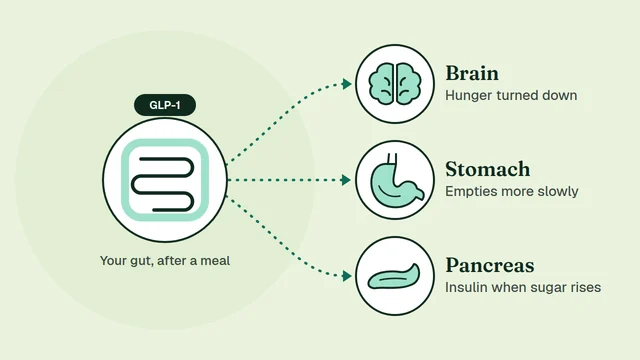
Semaglutide copies one gut hormone, GLP-1, which tells the brain you have eaten, slows the stomach and helps the pancreas release insulin when sugar rises. Tirzepatide acts on two hormone receptors, GIP and GLP-1, in a single molecule (US prescribing information). Both are injected once a week, and both start at a low dose that your doctor raises every four weeks or more, mainly to let the stomach adjust. Semaglutide's half-life is about a week and tirzepatide's about five days, so both keep working between doses. They are never taken together. For the plain-language version of how these hormones work, read GLP-1 explained simply.
What the trials show
| Trial | Who was in it | What it found |
|---|---|---|
| STEP 1 (semaglutide) | 1,961 adults with obesity, no diabetes, 68 weeks | 14.9% average weight loss, against 2.4% on placebo |
| SURMOUNT-1 (tirzepatide) | 2,539 adults with obesity, no diabetes, 72 weeks | 15.0% to 20.9% average loss by dose, against 3.1% on placebo |
| SURMOUNT-5 (head to head) | 751 adults with obesity, no diabetes, 72 weeks, open-label | 20.2% with tirzepatide, 13.7% with semaglutide |
| SELECT (semaglutide) | 17,604 adults 45 and over with heart disease and BMI 27 or more, no diabetes | 20% fewer heart attacks, strokes and heart deaths |
| SURMOUNT-OSA (tirzepatide) | Adults with obesity and moderate to severe sleep apnoea | About half as many breathing pauses an hour, against little change on placebo |
| SURPASS-2 (type 2 diabetes) | 1,879 adults with type 2 diabetes, 40 weeks, open-label | Tirzepatide lowered HbA1c and weight more than semaglutide 1 mg |
| FLOW (semaglutide) | Adults with type 2 diabetes and kidney disease | 24% lower risk of major kidney events or death from kidney or heart causes |
Two cautions. SURMOUNT-5 was open-label, so patients knew which medicine they were taking. And trial averages come from groups that differ from a typical Indian clinic. STEP 6, run in Japan and South Korea, found 13.2% average loss with semaglutide at 68 weeks (Kadowaki et al., 2022), but we are not aware of a large trial of either medicine run only in Indian adults.
The questions that tip the choice
| Your situation | Doctors may lean towards | Why |
|---|---|---|
| Past heart attack, stroke or angina | Semaglutide | Published outcome evidence in this group (SELECT) |
| A lot of weight to lose, e.g. a 15 to 20% goal | Tirzepatide | Larger average loss head to head (SURMOUNT-5); ESI 2025 guidance |
| Moderate to severe sleep apnoea | Tirzepatide | Trial evidence and a US approval for sleep apnoea |
| Type 2 diabetes with kidney disease | Semaglutide | Kidney outcome evidence (FLOW) |
| Type 2 diabetes, HbA1c well above target | Either; tirzepatide lowered HbA1c more | SURPASS-2 |
| Fatty liver with fibrosis (MASH) | Semaglutide | An approved use on its label |
| On the contraceptive pill | Either, with a plan | Tirzepatide needs a backup method around dose changes |
| Pregnancy planned within months | Often neither, for now | Semaglutide should stop at least 2 months before trying |
Diabetes needs its own care: adding either medicine changes how insulin and sulfonylureas behave, so read why your diabetologist should be involved. For PCOS, where contraception and pregnancy timing matter most, see what the evidence says about PCOS and GLP-1 medicines.
Side effects: closer than you might think
Both medicines mainly cause stomach side effects, most often while the dose is going up. In SURMOUNT-5, nausea was reported by about 44% of patients on each medicine, while vomiting was less common with tirzepatide (15.0% against 21.3%) (trial results, ClinicalTrials.gov). Because the trial was open-label and not designed to compare side effects, these differences are a guide, not a verdict. The warnings on both labels are similar: pancreatitis, gallbladder problems, dehydration from vomiting, low sugar with insulin or sulfonylureas, and a boxed warning against use in people with a personal or family history of medullary thyroid cancer or MEN 2 (semaglutide label, tirzepatide label).
What should not decide it
- Someone else's result. Weight loss varies widely between people on the same medicine and dose.
- "Stronger is better." The bigger average is real, but the medicine you can tolerate and continue does more for you than the one you stop in month two.
- A fixed plan to stop in three months. Weight tends to return after stopping either medicine, so the choice should be one you can sustain. Our guide to coming off without the weight coming back explains why.
Long-term affordability is a fair part of the conversation, and a good doctor talks about it openly. It belongs in your consultation, set against your health, rather than in a headline.
Switching later is normal
Starting on one medicine does not lock you in. Doctors switch when side effects do not settle, when weight loss stalls well short of the goal, or when a new condition changes the balance. A switch is planned like a fresh start, usually at a lower dose of the new medicine, with your doctor setting each step.
The right choice depends on you
A doctor looks at your history, your tests and your plans before recommending anything, and explains the reasons. It starts with a 2-minute eligibility check.
Frequently asked questions
Is tirzepatide better than semaglutide?
For weight loss on average, yes: in the SURMOUNT-5 head-to-head trial, tirzepatide produced 20.2% loss against 13.7% with semaglutide over 72 weeks. But semaglutide has stronger published evidence for heart and kidney protection in some groups, and the better medicine for you depends on your health, side effects and plans.
Which has fewer side effects, semaglutide or tirzepatide?
They are similar. Both mainly cause nausea, loose motions, constipation and vomiting, most often during dose increases. In SURMOUNT-5 nausea rates were about the same and vomiting was less common with tirzepatide, but the trial was not designed to compare side effects.
Which is better if I have heart disease?
Semaglutide has a completed outcome trial in this group: in SELECT, adults with heart disease and overweight but no diabetes had 20% fewer heart attacks, strokes and heart deaths on semaglutide than on placebo. Your doctor will weigh this with your other conditions.
Can I switch from semaglutide to tirzepatide?
Yes, if your doctor thinks it will help, for example when side effects do not settle or weight loss stalls. The switch is planned like a fresh start, usually at a lower dose, and the two are never taken together.
Does tirzepatide affect the contraceptive pill?
Yes. Its label advises switching to a non-oral contraceptive, or adding a barrier method, for 4 weeks after starting and for 4 weeks after each dose increase. Semaglutide does not carry this warning, but it should be stopped at least 2 months before a planned pregnancy.

Medically reviewed by
MBBS (AFMC), MD (General Medicine), MRCP (UK), FRCP (Glasgow), PGDCCPReg. No. MP23180, Madhya Pradesh Medical Council
Dr. (Major) Bhavesh Talera is a consultant in internal medicine. He trained at the Armed Forces Medical College (AFMC) and served in the Armed Forces, which is where his rank of Major comes from, and holds an MD in General Medicine, MRCP (UK), FRCP (Glasgow) and a PGDCCP. He consults with ALTRcare patients and medically reviews many of our guides to GLP-1 medicines, side effects and long-term weight care.
Last reviewed 28 October 2026 · How we review our guides
Sources
- Tirzepatide as Compared with Semaglutide for the Treatment of Obesity (SURMOUNT-5) (New England Journal of Medicine, 11 May 2025)
- SURMOUNT-5 results (NCT05822830) (ClinicalTrials.gov)
- Once-Weekly Semaglutide in Adults with Overweight or Obesity (STEP 1) (New England Journal of Medicine, 18 March 2021)
- Tirzepatide Once Weekly for the Treatment of Obesity (SURMOUNT-1) (New England Journal of Medicine, 4 June 2022)
- Semaglutide and Cardiovascular Outcomes in Obesity without Diabetes (SELECT) (New England Journal of Medicine, 11 November 2023)
- Tirzepatide for the Treatment of Obstructive Sleep Apnea and Obesity (SURMOUNT-OSA) (New England Journal of Medicine, 21 June 2024)
- FDA Approves First Medication for Obstructive Sleep Apnea (US Food and Drug Administration, 20 December 2024)
- Tirzepatide versus Semaglutide Once Weekly in Patients with Type 2 Diabetes (SURPASS-2) (New England Journal of Medicine, 25 June 2021)
- Effects of Semaglutide on Chronic Kidney Disease in Patients with Type 2 Diabetes (FLOW) (New England Journal of Medicine, 24 May 2024)
- Semaglutide once a week in adults with overweight or obesity, with or without type 2 diabetes, in an east Asian population (STEP 6) (Lancet Diabetes & Endocrinology)
- ESI Clinical Practice Guidelines for the Evaluation and Management of Obesity in India: An Update (2025) (Indian Journal of Endocrinology and Metabolism, 26 August 2025)
- WEGOVY (semaglutide) injection, US prescribing information (DailyMed, US National Library of Medicine)
- ZEPBOUND (tirzepatide) injection, US prescribing information (DailyMed, US National Library of Medicine)
Ready to take the next step?
Take the free 2-minute eligibility assessment. A doctor reviews it before anything is prescribed, with no obligation.
Free PDF guide
Your 3-month tirzepatide plan, in seven pages
- How tirzepatide works and the 2.5 mg → 5 mg → 7.5 mg dose steps
- Everything in the plan, Standard vs Premium, from ₹34,999 (₹11,666 a month)
- What results look like, from the trials and from ALTRcare patients
- Your four doctors, and what happens after month 3

This article is for general educational purposes and is not a substitute for personalised medical advice. GLP-1 medications are prescription-only and not suitable for everyone. Always consult a qualified doctor before starting, changing, or stopping any treatment.