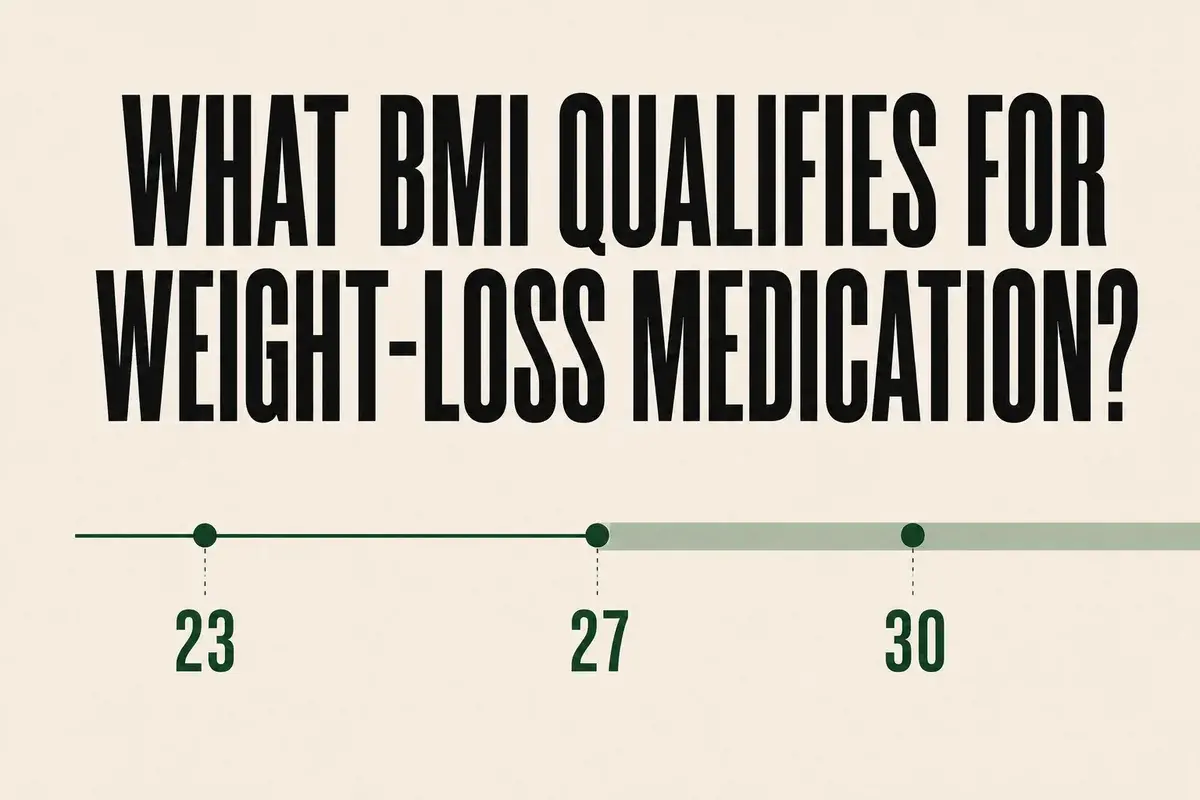
Am I a Good Candidate for GLP-1 Weight-Loss Medication?
A plain checklist of what actually makes someone a strong candidate, and what a doctor looks for before saying yes.
ALTRcare Medical Team
Clinical Editorial

There's no single rule that decides this; it's a judgement a doctor makes. But there are clear signs that someone is a strong candidate. Here's the honest checklist.
Updated 8 October 2026: how India now defines obesity
In January 2025, Indian experts (N-DOC, Fortis C-DOC and AIIMS, released alongside a Lancet Diabetes & Endocrinology commission) published a new definition of obesity for Asian Indians. A BMI above 23 now counts as obesity, in two stages: Stage 1 is extra body fat without effects on organs or daily life; Stage 2 adds abdominal fat (a high waist size or waist-to-height ratio) plus a related problem such as knee arthritis or type 2 diabetes. In August 2026 the first joint consensus of the Obesity and Metabolic Surgery Society of India and the Endocrine Society of India (78 experts, 55 recommendations) added that treatment should not be decided on BMI or weight alone. Older cut-offs you will still see quoted (overweight from 23, obese from 25 or 27.5) predate this.
Signs you may be a strong candidate
- You have a meaningful amount of weight to lose, not just a few kilos.
- You've genuinely tried diet and lifestyle changes and they haven't held.
- You carry metabolic risk, high waist, prediabetes, fatty liver, PCOS, or high blood pressure.
- You're ready to pair medication with habit changes, not use it as a sole quick fix.
- You're comfortable being managed by a doctor over several months.
When a doctor may say 'not yet' or 'not this'
- Very little to lose, and the basics haven't genuinely been tried.
- Certain medical histories that need addressing first.
- Pregnancy or planning pregnancy soon (discuss timing with your doctor).
- Expecting the medication to work without any lifestyle involvement.
The realistic mindset
The best candidates aren't looking for magic; they're looking for a tool that finally makes the biology manageable while they do the rest. That framing is itself a good sign.
Find out where you stand
Take the 2-minute assessment, a doctor reviews your profile and tells you honestly if you may be a candidate.
Key takeaways
- There's no single rule, a doctor makes the call.
- Strong candidates have real weight to lose and failed lifestyle attempts.
- Metabolic risk (waist, prediabetes, PCOS, fatty liver) strengthens the case.
- Best results come from pairing medication with habits, not replacing them.
- A doctor may advise 'not yet' depending on your history or timing.
A note on medical advice
This article is educational and not a substitute for medical advice. Only a licensed doctor can decide whether any medication is right for you.
Want an honest read on your case?
Message our care team for a straight answer.
Frequently asked questions
Am I a good candidate for GLP-1 weight-loss medication?
Strong candidates typically have a meaningful amount to lose, have tried lifestyle changes without lasting success, and carry metabolic risk such as high waist size, prediabetes, PCOS, or fatty liver. Being ready to combine medication with habit change also helps. Only a doctor can confirm eligibility for you.
Who is not a good candidate?
People with very little to lose who haven't genuinely tried the basics, those with certain medical histories that need addressing first, and anyone pregnant or planning pregnancy soon should discuss timing with a doctor. Expecting results without any lifestyle involvement also makes it less suitable.
Sources
- New definition of obesity for Asian Indians living in India released (Fortis Healthcare (N-DOC, Fortis C-DOC, AIIMS), 15 January 2025)
- OSSI–ESI consensus calls for personalised, stigma-free obesity care in India (Indian Pharma Post, 21 August 2026)
Ready to take the next step?
Take the free 2-minute eligibility assessment. A doctor reviews it before anything is prescribed, with no obligation.
This article is for general educational purposes and is not a substitute for personalised medical advice. GLP-1 medications are prescription-only and not suitable for everyone. Always consult a qualified doctor before starting, changing, or stopping any treatment.