Why GLP-1 Medication Helps Both PCOS and Fatty Liver
PCOS and fatty liver look like unrelated diagnoses. Underneath, they usually share one engine: insulin resistance. That is why one treatment approach moves both.
ALTRcare Medical Team
Clinical Editorial
The short answer: PCOS and fatty liver respond to the same treatment because they largely run on the same problem. Insulin resistance pushes the ovaries to make excess androgens (driving PCOS symptoms) and pushes the liver to store fat (driving fatty liver). GLP-1 supported weight loss attacks that shared engine, which is why patients so often see periods regularise AND liver enzymes fall on the same treatment, at the same time.
Two diagnoses, one engine
Insulin resistance means your cells respond sluggishly to insulin, so your pancreas compensates by producing more of it. That chronically high insulin does different damage in different organs. In the ovaries, it stimulates androgen production and disrupts ovulation: irregular periods, acne, facial hair, the classic PCOS picture. In the liver, it drives fat creation and storage: fatty liver, rising SGPT/SGOT, and over years, the risk of real liver damage. Same upstream problem, two downstream diagnoses.
This is why the two conditions travel together so often. Studies consistently find fatty liver in a large share of women with PCOS, well beyond what their weight alone predicts. If you have one, it is worth asking your doctor to check for the other. In India this matters even more: the South Asian body type stores fat viscerally, around the liver and organs, at lower body weights, which is why lean-looking Indians get fatty liver and why Indian PCOS so often comes with a metabolic signature.
What weight loss does to PCOS
- Even 5 to 10 percent weight loss measurably lowers insulin and androgen levels.
- Many women see cycles regularise and ovulation restart in that same range.
- Skin and hair symptoms improve gradually as androgens fall (give this months, not weeks).
- Fertility improves for many, which is also why contraception planning matters on treatment: GLP-1 medicines must be stopped before pregnancy.
What weight loss does to fatty liver
- There is no approved "fatty liver pill" in routine Indian practice. Weight loss IS the treatment.
- Around 5 percent weight loss starts reducing liver fat; 7 to 10 percent can improve inflammation; more can begin to reverse early fibrosis.
- Liver enzymes (SGPT/SGOT) often start falling within a few months of steady weight loss.
- GLP-1 molecules are being studied directly in fatty liver disease, with semaglutide showing genuine promise in trials of the more advanced form (MASH). Today, the proven benefit for a typical patient still comes through the weight loss itself.
Why a GLP-1 specifically, and not just dieting harder
Because insulin resistance rigs the game. High insulin promotes fat storage and drives hunger, so the same willpower buys less progress than it would in a metabolically healthy person. Many PCOS and fatty liver patients have genuinely dieted for years and concluded they are weak. They are not. They have been pushing against a hormonal current. GLP-1 medicines quiet appetite and food noise enough that a sensible Indian diet becomes sustainable, and the 5 to 10 percent loss that both conditions need becomes reachable instead of theoretical.
This is a use case for medical supervision, not self-medication
PCOS patients need pregnancy planning built into treatment, and fatty liver patients need liver enzymes tracked so improvement is documented rather than assumed. Both are reasons to do this with a doctor who follows up, not a pharmacy transaction.
What a sensible treatment plan looks like
- 1Baseline tests: HbA1c and fasting sugar, lipids, liver enzymes, and for PCOS the relevant hormonal work-up if not already done.
- 2GLP-1 medication with doctor-led titration, chosen against your budget and how much weight you need to lose.
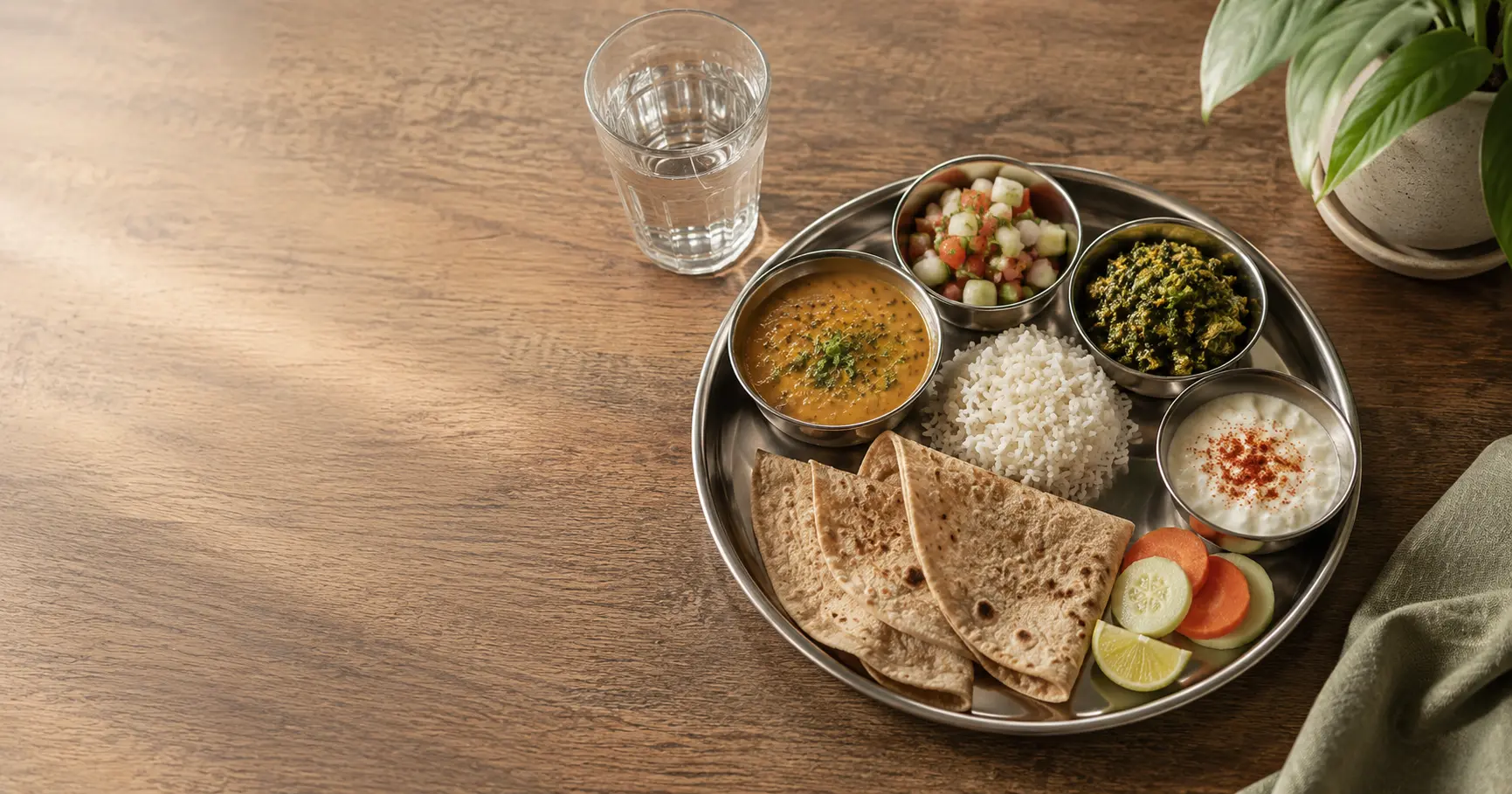
- 3A protein-forward Indian diet plan, because muscle preservation matters and because dal-roti-rice defaults are carbohydrate-heavy for an insulin-resistant body.
- 4Repeat tests at around 3 months: falling enzymes and improving sugar numbers are the objective proof the plan is working.
- 5A maintenance strategy from day one, since both conditions return if the weight does.
Have PCOS, fatty liver, or both?
These are exactly the conditions ALTRcare's doctor-led GLP-1 programs are built around: proper baseline testing, medication, an Indian diet plan and follow-ups that track your actual lab numbers. Start with the free 2-minute assessment.
Key takeaways
- PCOS and fatty liver usually share one driver: insulin resistance.
- 5 to 10 percent weight loss is the evidence-backed target that moves both conditions.
- GLP-1 medicines make that target reachable by removing the appetite handicap insulin resistance creates.
- PCOS adds a pregnancy-planning requirement; fatty liver adds enzyme tracking. Both need a doctor in the loop.
- Indians develop both conditions at lower body weights, so do not wait for a high BMI to take them seriously.
Frequently asked questions
Can GLP-1 medication cure PCOS?
PCOS is managed, not cured. But because insulin resistance drives most PCOS symptoms, GLP-1 supported weight loss is one of the most effective ways to bring cycles, skin and hormone levels back toward normal.
Can fatty liver be reversed with semaglutide?
Early-stage fatty liver is genuinely reversible with sustained weight loss, and semaglutide is one of the most effective tools for achieving that loss. Liver fat starts reducing around 5 percent weight loss, with inflammation improving around 7 to 10 percent.
I have PCOS and was told I also have grade 1 fatty liver. Is that a coincidence?
Almost certainly not. The two conditions share insulin resistance as a driver and occur together far more often than chance. The practical upside: one weight-loss focused treatment plan addresses both.
Will my periods change on GLP-1 medication?
Many women with PCOS see cycles become more regular as weight drops and insulin falls. That also means fertility can return unexpectedly, so discuss contraception with your doctor, because these medicines must not be taken during pregnancy.
Which tests show whether treatment is working?
Beyond the weighing scale: liver enzymes (SGPT/SGOT) for fatty liver, HbA1c or fasting insulin for the metabolic picture, and cycle regularity for PCOS. Improvement in these is the real outcome, not just the weight number.
It was never about willpower.
PCOS runs on insulin resistance. Our physician looks at the whole picture and tells you honestly what will help. Two minutes, and a doctor reviews every one.
This article is for general educational purposes and is not a substitute for personalised medical advice. GLP-1 medications are prescription-only and not suitable for everyone. Always consult a qualified doctor before starting, changing, or stopping any treatment.