Your First Week on a GLP-1: What to Eat on Dose Day, Day by Day
Nausea in the first week is common and usually mild, and what you eat on dose day makes the biggest difference. Here are ALTRcare's three food rules and a day-by-day Indian meal plan, vegetarian and non-vegetarian.
ALTRcare Medical Team
Clinical Editorial
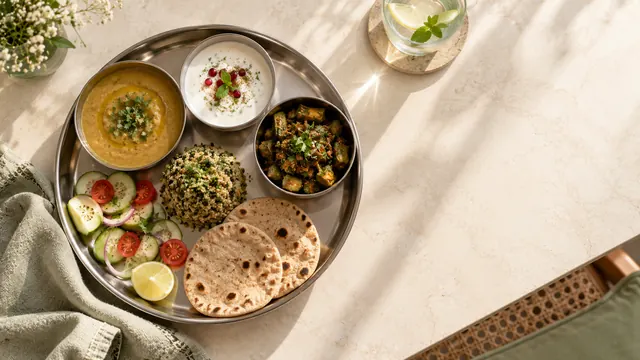
In your first week on a GLP-1 medicine, eat small, plain, low-oil meals on dose day and the two days after, with some protein at every meal, and stop at the first sign of fullness. Good choices are moong dal khichdi, curd rice, idli with sambar, vegetable dalia, and paneer bhurji with one phulka, or egg and chicken in a light stew if you eat them. Keep fried and oily food such as puri, pakora, samosa and heavy makhani gravies off the plate for the first week, because rich, fatty meals are the most common trigger of nausea on these medicines.
Key facts
- Nausea is the most common side effect of semaglutide 2.4 mg: 44% of patients in the trials reported it, against 16% on placebo (US prescribing information).
- Treatment starts at a low dose for the first four weeks (0.25 mg a week for semaglutide), and your doctor then raises it in steps (US prescribing information).
- Expert advice for stomach side effects: eat smaller meals, stop eating once full, and avoid high-fat or spicy food, especially while the dose is being raised (Wharton et al., Postgraduate Medicine 2022).
- Vomiting or loose motions can dehydrate you and strain the kidneys, so the label asks patients to take care not to lose fluid (US prescribing information).
- The weekly injection can be taken at any time of day, with or without meals (US prescribing information).
Why the first week feels different
GLP-1 medicines slow down how fast food leaves your stomach, which is part of why you feel full sooner and for longer (StatPearls). A large, oily meal already takes a long time to empty. Add the medicine, and that meal sits even longer. The heavy, too-full feeling that follows is what tips over into nausea, burping or acidity.
Most stomach side effects show up when you start and when the dose goes up, and they ease as your body adjusts. Your appetite will also be smaller than you are used to. Let your plate shrink with it. Finishing a full thali out of habit is the most common way patients make the first week harder than it needs to be.
Fibre needs a little care too. A 2025 advisory from four US obesity and nutrition societies suggests avoiding fatty or very high-fibre foods in the first few days, eating a small breakfast and then small meals every three to four hours, and drinking enough fluids (Mozaffarian et al., 2025). For an Indian kitchen that means saving big servings of rajma, chole and sprouts for later in the week.
ALTRcare's three food rules for the first week
- 1No oily or fried food. Puri, pakora, samosa, kachori, bhature and rich makhani or malai gravies are the usual culprits. So are the snacks people forget count as fried: namkeen, bhujia, fried papad and chips.
- 2Bland meals on dose day. Bland does not mean tasteless. It means less oil, less chilli and food that is soft and easy to digest, such as khichdi, curd rice, idli, dalia and soup. Jeera, ginger, curry leaves, a little haldi and salt are all fine.
- 3Protein at every meal. You will eat less, so what you do eat has to work harder. A katori of dal, a bowl of curd, some paneer or tofu, an egg, or a piece of chicken or fish at each meal helps protect your muscle while you lose weight. A 2025 joint advisory from four US obesity and nutrition societies suggests eating the protein part of the meal first (Mozaffarian et al., 2025).
Vegetarian and do not eat eggs? Protein is the hardest of the three rules to meet. Our guide to getting 70 g of protein a day as an Indian vegetarian, without eggs has the numbers for dal, paneer, curd, chana and soya.
Your first week, day by day
Day 1 is the day you take your first dose. Portions are small on purpose: a katori is about 150 ml. Pick one option for each meal. Vegetarian options come first; add egg, chicken or fish if you eat them.
Day 1: dose day
- Breakfast: vegetable poha with a spoon of roasted peanuts, or two idlis with sambar, or a besan chilla made on a non-stick tawa with very little oil.
- Mid-morning: a small bowl of curd or a glass of chaas.
- Lunch: one katori of moong dal khichdi with a spoon of curd and some cucumber. Non-veg: add a boiled egg.
- Evening: ginger tea with a small handful of roasted chana.
- Dinner, early and light: a bowl of tomato rasam or clear vegetable soup, then paneer bhurji made with little oil and one phulka. Non-veg: chicken clear soup with a phulka.
Day 2
- Breakfast: vegetable dalia cooked with a handful of moong dal, or ragi porridge made with milk.
- Lunch: curd rice with grated carrot, and a katori of plain dal.
- Evening: a glass of chaas and a piece of fruit, such as papaya or a banana.
- Dinner: lauki or tinda sabzi, a katori of dal and one phulka. Non-veg: fish in a thin, light gravy with a little rice.
Day 3
- Breakfast: two moong dal chillas with mint chutney, or vegetable upma with a bowl of curd.
- Lunch: plain dal, half a katori of rice, a dry sabzi such as beans or cabbage, and curd.
- Evening: dry-roasted makhana, or a small bowl of curd with chopped fruit.
- Dinner: paneer or tofu with sauteed vegetables and one roti. Non-veg: egg bhurji with one roti.
Days 4 to 6: widening the plate
By now you know how your stomach is reacting. If you feel fine, bring back more variety. Keep the portions small and the oil low.
- Breakfast: a plain dosa made with little oil and sambar, a paneer and vegetable sandwich, or oats or dalia with milk.
- Lunch: dal, a sabzi, salad and one or two phulkas or a small katori of rice. Rajma or chole in a small katori, if they agree with you.
- Evening: fruit with a few peanuts, roasted chana with chaas, or a small katori of moong sprouts chaat without fried sev.
- Dinner: a small soya chunk pulao with raita, or paneer or tofu tikka cooked on a tawa or in the oven. Non-veg: chicken or fish tikka, not fried.
Day 7: the day before your next dose
Eat normally within the three rules. If the week went well, you do not need to change anything for the next dose day. If dose day was rough, keep the dinner before it light and keep the next dose day plain again. Write down what you ate on the days you felt worst. The pattern is usually obvious within two weeks.
Fluids, chai and coffee
Sip water through the day rather than drinking a lot at once. Chaas, nimbu pani with little sugar, coconut water and clear soups all count. Chai and coffee are fine in small cups with little sugar; if you notice they make you queasy on an empty stomach, have them after food. More on that in our guide to chai and coffee on a GLP-1.
Fluids matter more than usual this week. The prescribing information warns that vomiting or loose motions can dehydrate you and, in some cases, harm the kidneys, and asks patients to take precautions to avoid losing fluid (US prescribing information). If you are losing fluid, an oral rehydration solution helps more than plain water.
If you feel sick anyway
- Stop eating at the first sign of fullness, even if half the katori is left.
- Eat slowly. Put the spoon down between bites.
- Stay upright for a while after meals instead of lying down straight away.
- Dry, plain foods such as a khakhra or a slice of toast often sit better than anything wet and rich.
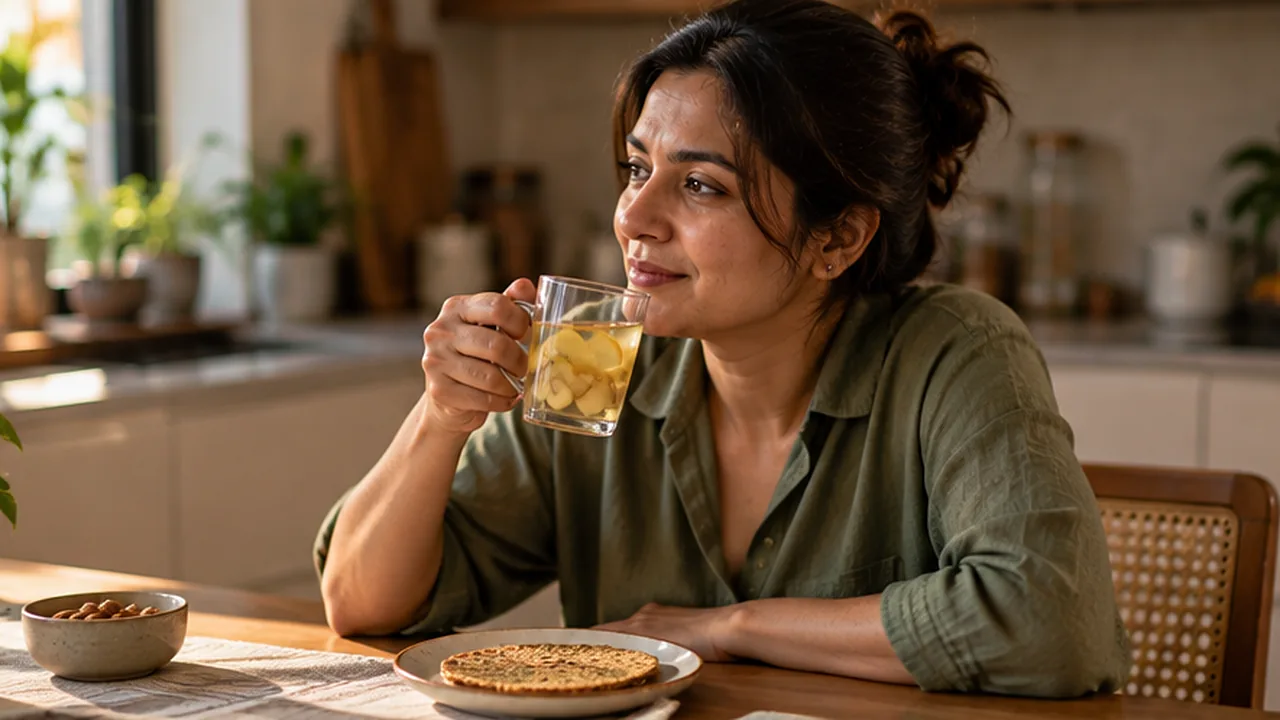
- Ginger tea or peppermint tea can help settle the stomach.
- Do not force food. Do keep sipping fluids.
These tips come from published expert advice on managing stomach side effects of GLP-1 medicines (Wharton et al., 2022; Gorgojo-Martínez et al., 2023).
When to call your doctor, not wait
- You cannot keep fluids down, or you are vomiting again and again.
- Very little urine, dark urine, or dizziness when you stand up. These are signs of dehydration.
- Severe pain in the upper tummy that may spread to the back, with or without vomiting. The label tells doctors to stop the medicine if pancreatitis is suspected.
- Pain on the upper right side of the tummy, fever, or yellow eyes or skin, which can point to the gallbladder.
- If you have diabetes and take insulin or a sulfonylurea: shakiness, sweating, sudden hunger or confusion, which can be low blood sugar.
All of these warnings are in the US prescribing information. They are uncommon, but they are the reason a doctor should be a message away in your first weeks.
Not started yet?
Before any medicine, a doctor reviews your health and tells you honestly whether it suits you. It starts with a 2-minute eligibility check.
Frequently asked questions
What should I eat on the day of my GLP-1 injection?
Small, plain, low-oil meals with some protein at each one: moong dal khichdi, curd rice, idli with sambar, vegetable dalia, or paneer bhurji with one phulka. Avoid fried and oily food on dose day and the two days after, and stop eating as soon as you feel full.
Can I eat spicy food in the first week?
Go easy on chilli in the first week, especially on dose day. Mild spices such as jeera, ginger and haldi are fine. Once you know how your stomach reacts, add heat back slowly.
Should I take the injection before or after food?
It does not matter for the medicine. The prescribing information says the weekly injection can be taken at any time of day, with or without meals. Pick a day and time you can keep every week, and keep that day's meals light.
Is it okay to skip meals if I am not hungry?
Eat something small with protein at your usual mealtimes even when hunger is low, and keep drinking fluids. Long gaps followed by a large meal tend to make nausea worse, and too little protein makes it harder to protect muscle.
Can I keep a vrat on dose day?
Ask your doctor first. In the first month, a full-day fast on dose day makes dehydration more likely, and if you have diabetes and take insulin or a sulfonylurea, fasting can bring on low blood sugar. Our guide to Navratri fasting on a GLP-1 has a safer approach.
Will I lose weight in the first week?
Some people see the scale move a little, much of it water. The first month is a starting dose meant to let your body adjust, and your doctor raises it in steps. Judge progress over months, not days.

Medically reviewed by
MBBS, MD (Internal Medicine)Reg. No. 2022/06/2939, Maharashtra Medical Council
Dr. Snigdha Sehgal (MBBS, MD Internal Medicine) is a consultant physician on ALTRcare's senior medical team, with a focus on metabolic health and medical weight management. She consults with ALTRcare patients on video and writes our plain-language guides to how GLP-1 medicines work.
Last reviewed 28 October 2026 · How we review our guides
Sources
- WEGOVY (semaglutide) injection, US prescribing information (revised June 2026) (DailyMed, US National Library of Medicine)
- Glucagon-Like Peptide-1 Receptor Agonists (StatPearls, NCBI Bookshelf)
- Managing the gastrointestinal side effects of GLP-1 receptor agonists in obesity: recommendations for clinical practice (Postgraduate Medicine)
- Nutritional priorities to support GLP-1 therapy for obesity: a joint Advisory from ACLM, ASN, OMA and TOS (American Journal of Clinical Nutrition)
- Clinical Recommendations to Manage Gastrointestinal Adverse Events in Patients Treated with GLP-1 Receptor Agonists: A Multidisciplinary Expert Consensus (Journal of Clinical Medicine)
Ready to take the next step?
Take the free 2-minute eligibility assessment. A doctor reviews it before anything is prescribed, with no obligation.
Free PDF guide
Your 3-month semaglutide plan, in seven pages
- How semaglutide works and the 0.25 mg → 0.5 mg → 1 mg dose steps
- Everything in the plan, Standard vs Premium, from ₹10,999 (₹3,666 a month)
- What results look like, from the trials and from ALTRcare patients
- Your four doctors, and what happens after month 3

This article is for general educational purposes and is not a substitute for personalised medical advice. GLP-1 medications are prescription-only and not suitable for everyone. Always consult a qualified doctor before starting, changing, or stopping any treatment.