70 g of Protein a Day as an Indian Vegetarian, Without Eggs
Dal, paneer, curd, chana and soya, with the protein in each serving worked out from India's own food composition tables, what each costs per 10 g of protein, and a full vegetarian day that adds up to about 74 g.
ALTRcare Medical Team
Clinical Editorial
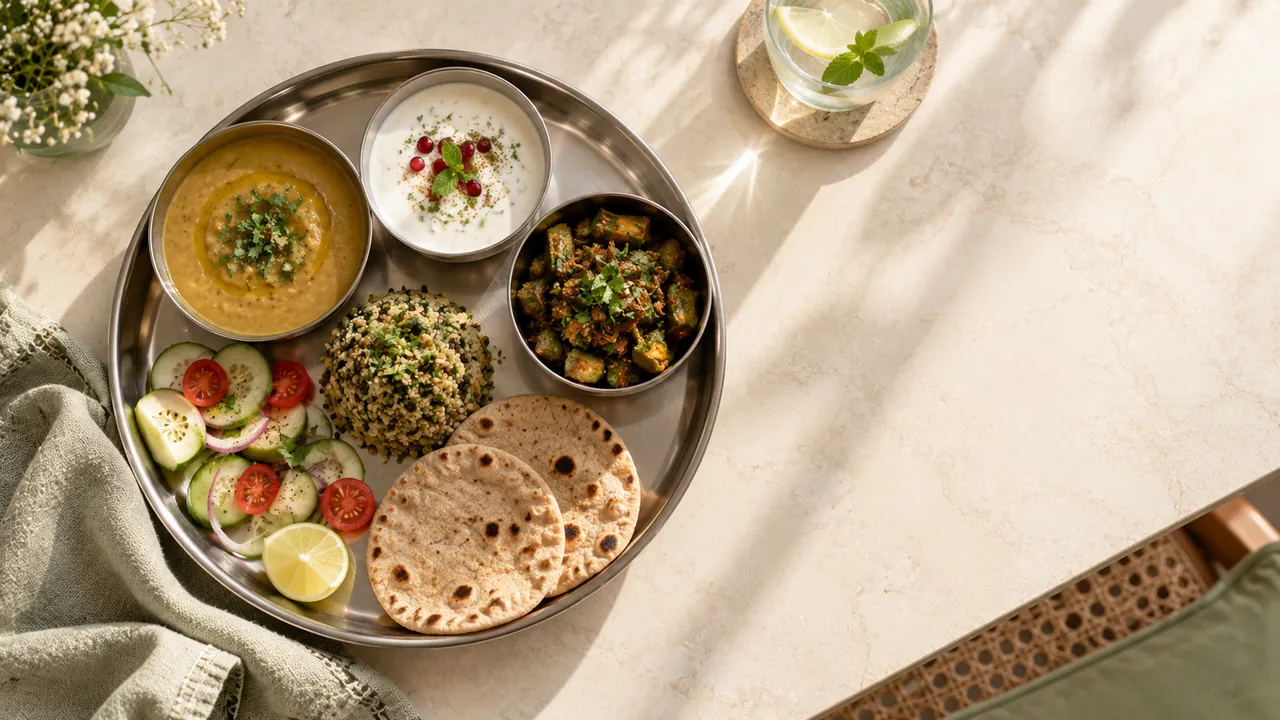
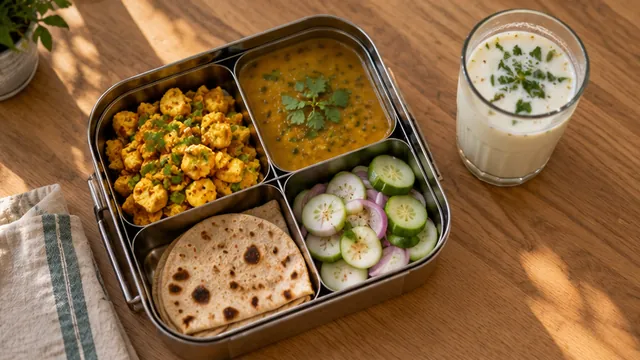
An Indian vegetarian who does not eat eggs can reach about 70 g of protein a day from ordinary food by putting a protein food at every meal: dal or chana, paneer, curd or milk, and soya. One katori of cooked dal made from 30 g of raw dal gives about 6.5 to 7.5 g, 50 g of paneer about 9.4 g, a 150 g bowl of curd about 6 g, and 20 g of dry soya chunks about 10 g. Three meals and one snack built this way add up to 70 g without protein powder.
Key facts
- ICMR-NIN's recommended protein intake for healthy Indian adults is 0.83 g per kg of body weight a day, about 54 g for a 65 kg adult (Dietary Guidelines for Indians 2024).
- During active weight loss, higher targets of 1.2 to 1.6 g per kg a day have been proposed, and the right body weight to base this on is unclear (joint nutrition advisory on GLP-1 therapy, 2025).
- Raw masoor dal has 24.35 g of protein per 100 g, moong dal 23.88 g, toor dal 21.70 g and paneer 18.86 g (Indian Food Composition Tables 2017, ICMR-NIN).
- Cereals and pulses eaten together in a 3:1 ratio by raw weight cover all the essential amino acids, and 250 ml of milk a day adds more (Dietary Guidelines for Indians 2024).
- At all-India average retail prices on 27 October 2026, 10 g of protein from masoor dal cost about ₹3.70 and from toor dal about ₹6.10 (Department of Consumer Affairs; our calculation).
Why 70 g, and is it your number?
ICMR-NIN's recommended allowance for a healthy adult is 0.83 g of protein per kg of body weight a day, which works out to about 54 g at 65 kg (DGI 2024). When you are losing weight, especially on a GLP-1 medicine that cuts appetite, there is a real risk of losing muscle along with fat. A 2025 advisory from four US obesity and nutrition societies notes that higher targets of 1.2 to 1.6 g per kg have been proposed during active weight loss, and that it is unclear whether to base this on actual, adjusted or ideal body weight (Mozaffarian et al., 2025).
For a woman whose healthy weight is around 55 to 60 kg, 1.2 g per kg comes to about 66 to 72 g. That is why 70 g is a sensible working target for many Indian adults losing weight. It is not a rule. Your doctor or nutritionist sets your own number from your weight, kidneys and activity. If you have kidney disease, do not raise your protein without asking first.
ICMR-NIN's own sample day for a 65 kg man, cereals, pulses, vegetables, curd and a little milk with nothing fancy, provides about 72 g of protein in roughly 2,080 kcal (DGI 2024, figure 9.1). The difference on a weight-loss plan is that you are eating less food overall, so protein has to take up a bigger share of a smaller plate.
How much protein is in your food
| Food and serving | Protein per 100 g | Protein per serving |
|---|---|---|
| Masoor dal, 30 g raw (1 katori cooked) | 24.35 g | 7.3 g |
| Moong dal, 30 g raw | 23.88 g | 7.2 g |
| Urad dal, 30 g raw | 23.06 g | 6.9 g |
| Toor dal, 30 g raw | 21.70 g | 6.5 g |
| Chana dal, 30 g raw | 21.55 g | 6.5 g |
| Rajma, 35 g raw (1 katori boiled) | 19.91 g | 7.0 g |
| Kala chana, 35 g raw | 18.77 g | 6.6 g |
| Whole moong for sprouts, 30 g dry | 22.53 g | 6.8 g |
| Soya bean, whole, 30 g raw | 37.80 g | 11.3 g |
| Soya chunks, 20 g dry | 52 g (maker's figure) | 10.4 g |
| Paneer, 50 g | 18.86 g | 9.4 g |
| Curd, 150 g bowl | 4.0 g (Amul label) | 6.0 g |
| Toned milk, 200 ml glass | 3.0 g (Amul label) | 6.0 g |
| Groundnuts, 20 g | 23.65 g | 4.7 g |
| Atta, 40 g (about 2 phulkas) | 10.57 g | 4.2 g |
| Rice, 60 g raw | 7.94 g | 4.8 g |
Three things stand out. Soya is the most protein-dense vegetarian food in the Indian kitchen. A katori of dal is a good contributor but not a foundation: you would need ten katoris to reach 70 g from dal alone. And sprouting does not add protein, so a katori of sprouts carries the protein of the dry moong it came from.
What protein costs at today's dal prices
| Food | All-India average retail price | Cost of 10 g protein |
|---|---|---|
| Masoor dal | ₹91.01 per kg | about ₹3.70 |
| Soya chunks (45 g pack) | ₹10 per pack | about ₹4.30 |
| Chana dal | ₹93.78 per kg | about ₹4.40 |
| Moong dal | ₹114.63 per kg | about ₹4.80 |
| Urad dal | ₹125.72 per kg | about ₹5.50 |
| Toor dal | ₹132.96 per kg | about ₹6.10 |
Protein does not have to be expensive. The cheapest dal on the list gives you 10 g of protein for under four rupees, and soya chunks are close behind.
A 74 g vegetarian day, no eggs, no powder
- 1
Breakfast
Moong dal chilla with curd: about 13.6 g
Two chillas from 40 g of soaked moong dal (9.6 g), with 100 g of curd (4 g) and mint chutney.
- 2
Mid-morning
A glass of toned milk: about 6 g
200 ml, as chai with less sugar or plain. Chaas made from 150 g of curd gives about the same.
- 3
Lunch
Dal, paneer sabzi, phulkas and curd: about 26.1 g
Toor dal from 30 g raw (6.5 g), 50 g paneer in a vegetable sabzi (9.4 g), 2 phulkas from 40 g atta (4.2 g) and a 150 g bowl of curd (6 g).
- 4
Evening
Roasted chana and peanuts: about 8 g
30 g roasted kala chana (5.6 g) with 10 g peanuts (2.4 g).
- 5
Dinner
Rajma, soya and rice: about 20.6 g
Rajma from 35 g raw (7 g), 20 g dry soya chunks in a curry or pulao (10.4 g) and rice from 40 g raw (3.2 g).
Total: about 74 g of protein. On a GLP-1 medicine, when appetite is low, eat the protein part of each meal first. The 2025 advisory suggests exactly this: protein-rich foods first in a meal, and small, regular meals at consistent times (Mozaffarian et al., 2025). In your first week on a new medicine, start smaller, and see our first-week guide to what to eat on dose day.
What about protein powder?
You do not need it to reach 70 g, as the day above shows. ICMR-NIN's 2024 guidelines advise against protein supplements for building muscle and say protein powders are unnecessary for a normal healthy life (DGI 2024, guideline 8). Some people on a GLP-1 medicine with very small appetites do find a supplement useful for a while. That is a decision to make with your doctor or nutritionist, not a default.
Protein alone does not protect muscle
The 2025 advisory is clear that more protein on its own is likely not enough to preserve muscle without structured strength training, and suggests strength work at least three times a week plus at least 150 minutes of moderate activity such as brisk walking (Mozaffarian et al., 2025). At home, squats from a chair, wall push-ups and resistance bands are a fine start. This matters even more when you eventually come off the medicine, because muscle helps keep the weight off.
Want a plan built around your kitchen?
A doctor reviews your health first, and if you start a plan, your eating plan is built around the food your family already cooks. It starts with a 2-minute eligibility check.
Frequently asked questions
How can a vegetarian get 70 g of protein a day in India without eggs?
Put a protein food at every meal: dal or chana, paneer, curd or milk, and soya chunks. For example, moong dal chillas with curd for breakfast, a glass of milk mid-morning, dal with paneer sabzi and curd for lunch, roasted chana in the evening, and rajma with soya for dinner comes to about 74 g.
How much protein is in one katori of dal?
A katori of cooked dal made from 30 g of raw dal has about 6.5 to 7.5 g of protein, depending on the dal. By IFCT 2017, raw masoor dal has 24.35 g per 100 g, moong dal 23.88 g and toor dal 21.70 g. Cooking adds water, not protein.
How much protein is in 100 g of paneer?
About 18.9 g according to the Indian Food Composition Tables 2017, and 20 g according to Amul's label for its fresh paneer. A 50 g serving gives about 9 to 10 g.
Do I need protein powder on a GLP-1 medicine?
Not usually. Ordinary Indian vegetarian food can reach 70 g a day, and ICMR-NIN's 2024 guidelines say protein powders are unnecessary for a normal healthy life. If your appetite is very small, ask your doctor or nutritionist whether a supplement makes sense for a while.
What is the cheapest vegetarian protein in India?
At all-India average retail prices on 27 October 2026, masoor dal gave 10 g of protein for about ₹3.70, soya chunks for about ₹4.30 and toor dal for about ₹6.10, by our calculation from government prices and IFCT 2017 values.

Medically reviewed by
MBBS, MD (Internal Medicine)Reg. No. 2022/06/2939, Maharashtra Medical Council
Dr. Snigdha Sehgal (MBBS, MD Internal Medicine) is a consultant physician on ALTRcare's senior medical team, with a focus on metabolic health and medical weight management. She consults with ALTRcare patients on video and writes our plain-language guides to how GLP-1 medicines work.
Last reviewed 28 October 2026 · How we review our guides
Sources
- Indian Food Composition Tables 2017 (Longvah T, et al.) (ICMR-National Institute of Nutrition, Hyderabad)
- Dietary Guidelines for Indians 2024 (ICMR-National Institute of Nutrition, Hyderabad)
- Nutritional priorities to support GLP-1 therapy for obesity: a joint Advisory from ACLM, ASN, OMA and TOS (American Journal of Clinical Nutrition)
- Price Monitoring System: all-India average retail prices (as on 27 October 2026) (Department of Consumer Affairs, Government of India, 27 October 2026)
- Amul Fresh Paneer: nutrition information (Dudhsagar Dairy (Mehsana District Co-operative Milk Producers' Union))
- Amul Masti Dahi: nutrition information (Dudhsagar Dairy (Mehsana District Co-operative Milk Producers' Union))
- Amul Taaza toned milk: nutrition information (Dudhsagar Dairy (Mehsana District Co-operative Milk Producers' Union))
- Fortune Soya Chunks (AWL Agri Business)
- Nutrela Soya Chunks and Granules (Patanjali Foods)
Ready to take the next step?
Take the free 2-minute eligibility assessment. A doctor reviews it before anything is prescribed, with no obligation.
Free PDF guide
Your 3-month semaglutide plan, in seven pages
- How semaglutide works and the 0.25 mg → 0.5 mg → 1 mg dose steps
- Everything in the plan, Standard vs Premium, from ₹10,999 (₹3,666 a month)
- What results look like, from the trials and from ALTRcare patients
- Your four doctors, and what happens after month 3

This article is for general educational purposes and is not a substitute for personalised medical advice. GLP-1 medications are prescription-only and not suitable for everyone. Always consult a qualified doctor before starting, changing, or stopping any treatment.