Bone Health During Rapid Weight Loss: What Indians Over 40 Should Watch
Any significant weight loss takes a little bone with it, whether it comes from dieting, surgery or medication. In a population already short on vitamin D and calcium, that deserves a plan.
ALTRcare Medical Team
Clinical Editorial
The short answer: bone responds to load. When you carry less weight, your skeleton needs less bone to do its job, so some density is lost alongside fat. This happens with dieting, with bariatric surgery and with medication-assisted weight loss. It is not a reason to avoid losing weight, since obesity itself damages joints and metabolic health. It is a reason to lose weight with resistance training, enough protein, and adequate calcium and vitamin D, particularly if you are over 40 or postmenopausal.
Why bone changes when weight changes
Bone is living tissue that constantly rebuilds itself in response to mechanical stress. Carrying extra body weight is a form of constant loading, which is part of why people with obesity often have higher measured bone density. Take the load away and the signal to maintain that density weakens. Add reduced food intake, and you have less calcium and protein arriving at the same time. The result is a modest, real decline in bone mineral density during active weight loss.
Scale of the effect
Studies of significant weight loss generally show small percentage declines in bone density at the hip and spine, larger after bariatric surgery than after medical weight loss. For most people this is a manageable change, not a fracture emergency. The people who need to pay real attention are those who already start with thin bones.
Why this matters more in India
- Vitamin D deficiency is widespread across Indian adults, including in sunny cities, largely because of indoor work, clothing coverage and skin pigmentation.
- Dietary calcium runs low in many vegetarian diets that rely on grains and pulses rather than dairy, and lower still in those avoiding dairy.
- Protein intake is often inadequate even before appetite drops on a GLP-1.
- Resistance training is uncommon compared with walking, which is excellent for the heart but a weak stimulus for bone.
- Peak bone mass tends to be lower in South Asian populations, so there is less reserve to draw down.
Who should get a bone check
| Situation | Worth discussing with your doctor |
|---|---|
| Postmenopausal woman planning significant weight loss | Yes, baseline bone density and vitamin D |
| Age over 60, either sex | Yes, especially with any previous fracture |
| Previous fragility fracture at any age | Yes, before starting |
| Long-term steroid use, thyroid or coeliac disease | Yes |
| Very low body weight or history of restrictive eating | Yes |
| Healthy adult in their 30s with obesity | Usually not needed; focus on protein and training |
The four things that protect bone
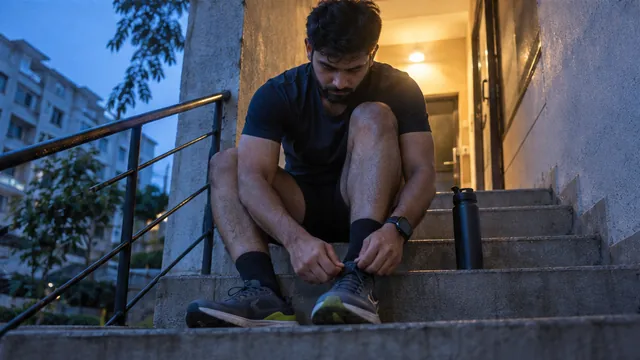
- 1Resistance training, twice a week minimum. This is the single most effective lever. Loading bone tells it to stay. Bodyweight squats, resistance bands, dumbbells or gym machines all count. Walking does not replace it.
- 2Protein at every meal. Bone is roughly half protein by volume. Aim for a protein source at each meal: dal, paneer, curd, eggs, soya, chicken or fish. On a GLP-1, when appetite is low, protein should be the first thing on the plate, not the last.
- 3Calcium, mostly from food. Dairy, ragi, sesame, almonds, tofu set with calcium, and green leafy vegetables. Supplements are useful when intake genuinely falls short, but food first is the standard advice.
- 4Vitamin D, checked and corrected. This is the one where Indian patients most often need a supplement. Get a level checked rather than guessing at a dose, and recheck after correction.
The overlap you should notice
Resistance training and protein are the same two things that protect muscle during weight loss. You are not adding a separate bone programme. You are doing the muscle programme, which happens to also be the bone programme.
What not to do
Do not respond to this by avoiding weight loss. Untreated obesity carries its own fracture risk through falls, worse balance and higher rates of diabetes, and it wrecks knees and hips. Do not start high-dose calcium or vitamin D on your own either. Both have upper limits, and megadoses of vitamin D bought without testing are a genuinely common problem in Indian practice.
Care that answers questions like this
ALTRcare patients get a doctor-led plan, monthly follow-ups and same-day WhatsApp answers, not just a prescription. Take the free 2-minute assessment to see if a GLP-1 plan fits you.
Key takeaways
- Bone density falls modestly during any significant weight loss, because bone responds to load.
- Indian patients often start with low vitamin D, low calcium intake and low protein intake.
- Resistance training twice a week is the strongest protective step. Walking alone is not enough.
- Protein at every meal protects muscle and bone together.
- Get vitamin D tested rather than guessing a dose, and discuss a baseline DEXA if you are postmenopausal or over 60.
Frequently asked questions
Does semaglutide cause osteoporosis?
The medicine itself is not established as directly damaging bone. What affects bone is the weight loss and the reduced food intake that comes with it, which is true of any weight-loss method.
How much protein do I need while losing weight?
Requirements vary with body size and activity, so ask your doctor or nutritionist for your number. The practical rule is a protein source at every single meal, prioritised ahead of carbohydrates when appetite is low.
Should I take a calcium supplement?
Only if your dietary intake is genuinely low, and ideally on your doctor's advice. Food sources are preferred, and very high supplement doses have their own risks.
Is walking enough to protect my bones?
Walking is excellent for general health but is a weak stimulus for bone in the spine and hip. Resistance training is what provides the loading signal bone responds to.
Should I get a DEXA scan before starting a GLP-1?
It is worth discussing if you are postmenopausal, over 60, have had a fragility fracture, or have another risk factor such as long-term steroid use. For most younger adults it is not routinely needed.
Ready to take the next step?
Take the free 2-minute eligibility assessment. A doctor reviews it before anything is prescribed, with no obligation.
This article is for general educational purposes and is not a substitute for personalised medical advice. GLP-1 medications are prescription-only and not suitable for everyone. Always consult a qualified doctor before starting, changing, or stopping any treatment.