Why People on Semaglutide Suddenly Stop Wanting to Drink
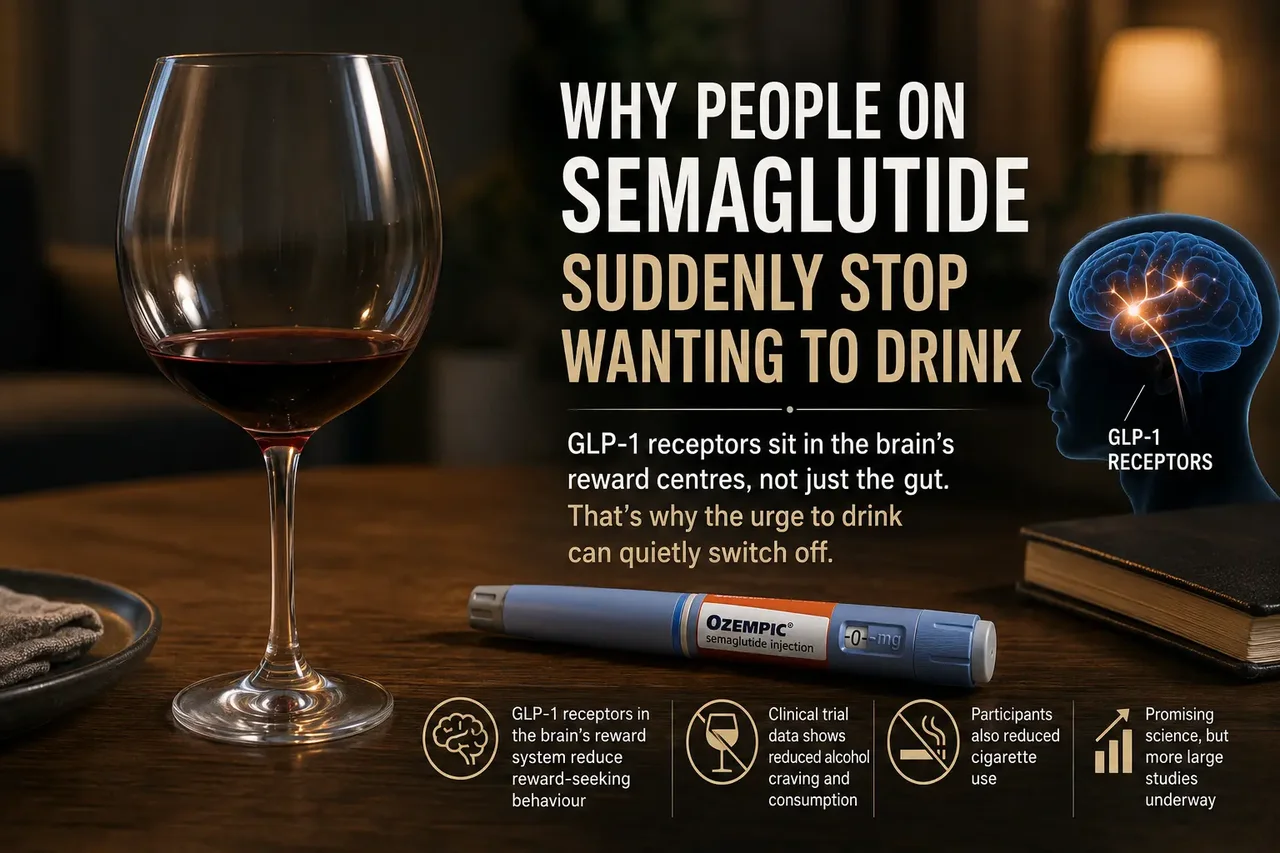
GLP-1 receptors sit in the brain's reward centres, not just the gut. That's why the urge to drink can quietly switch off.
ALTRcare Medical Team
Clinical Editorial
Scroll through any GLP-1 forum and you'll find the same surprised confession over and over: "I started Ozempic for weight loss, and now I just… don't want wine anymore." People who weren't trying to quit drinking find the urge has quietly switched off. It sounds like a side effect. It's actually a clue about how these drugs work.
GLP-1 receptors aren't only in your gut
Semaglutide is famous for slowing digestion and curbing appetite. But GLP-1 receptors also sit deep in the brain's reward circuitry — the dopamine pathways that drive wanting and seeking. When the drug acts there, it doesn't just dial down hunger. It turns down the volume on the whole reward-seeking system.
"Food noise" runs on the same circuit as the drink
Many patients describe semaglutide silencing their "food noise" — the constant mental chatter about the next snack. That chatter and the pull toward a drink, a cigarette, or a compulsive scroll all run through overlapping dopamine machinery. Quiet one and you often quiet the others. This is the same appetite-signalling system behind the insulin resistance trap.
What the research shows
This isn't just anecdote. A phase 2 randomised, placebo-controlled trial published in JAMA Psychiatry in February 2025 tested low-dose semaglutide in adults with alcohol use disorder. Over nine weeks it significantly reduced alcohol craving, the amount consumed on drinking days, and heavy-drinking days versus placebo — and participants who also smoked cut back on cigarettes too. Larger observational studies have pointed the same direction.
The honest caveats
That trial was small, short, and at low doses, and semaglutide is not approved as a treatment for alcohol use disorder — bigger phase 3 trials are underway. This is a reason to be intrigued, not a reason to self-medicate. The reward-system effect is one more illustration that GLP-1s are metabolic and neurological drugs at once, which is exactly why they belong under medical supervision rather than bought off a shelf.
Curious whether the same biology applies to you? An ALTRcare doctor can walk you through what GLP-1 therapy does and doesn't do.
Frequently asked questions
Does Ozempic make you stop drinking alcohol?
Many people report reduced alcohol cravings on semaglutide, and early trial data supports this. But it isn't approved as a treatment for alcohol use disorder, and effects vary from person to person.
Why would a weight-loss drug affect alcohol cravings?
GLP-1 receptors are present in the brain's reward and dopamine pathways, not just the gut. Acting there appears to reduce reward-seeking behaviour generally, which can include alcohol.
Should I take semaglutide to cut down on drinking?
Not on your own. The evidence is promising but early, and the drug needs medical supervision. Talk to a doctor about your goals before considering it.
Ready to take the next step?
Take the free 2-minute eligibility assessment. A doctor reviews it before anything is prescribed, with no obligation.
This article is for general educational purposes and is not a substitute for personalised medical advice. GLP-1 medications are prescription-only and not suitable for everyone. Always consult a qualified doctor before starting, changing, or stopping any treatment.