"Ozempic Babies": Why Some Women Get Pregnant on Semaglutide
Surprise pregnancies on GLP-1s are real, but the reason, and the safety warnings, are widely misunderstood.
ALTRcare Medical Team
Clinical Editorial
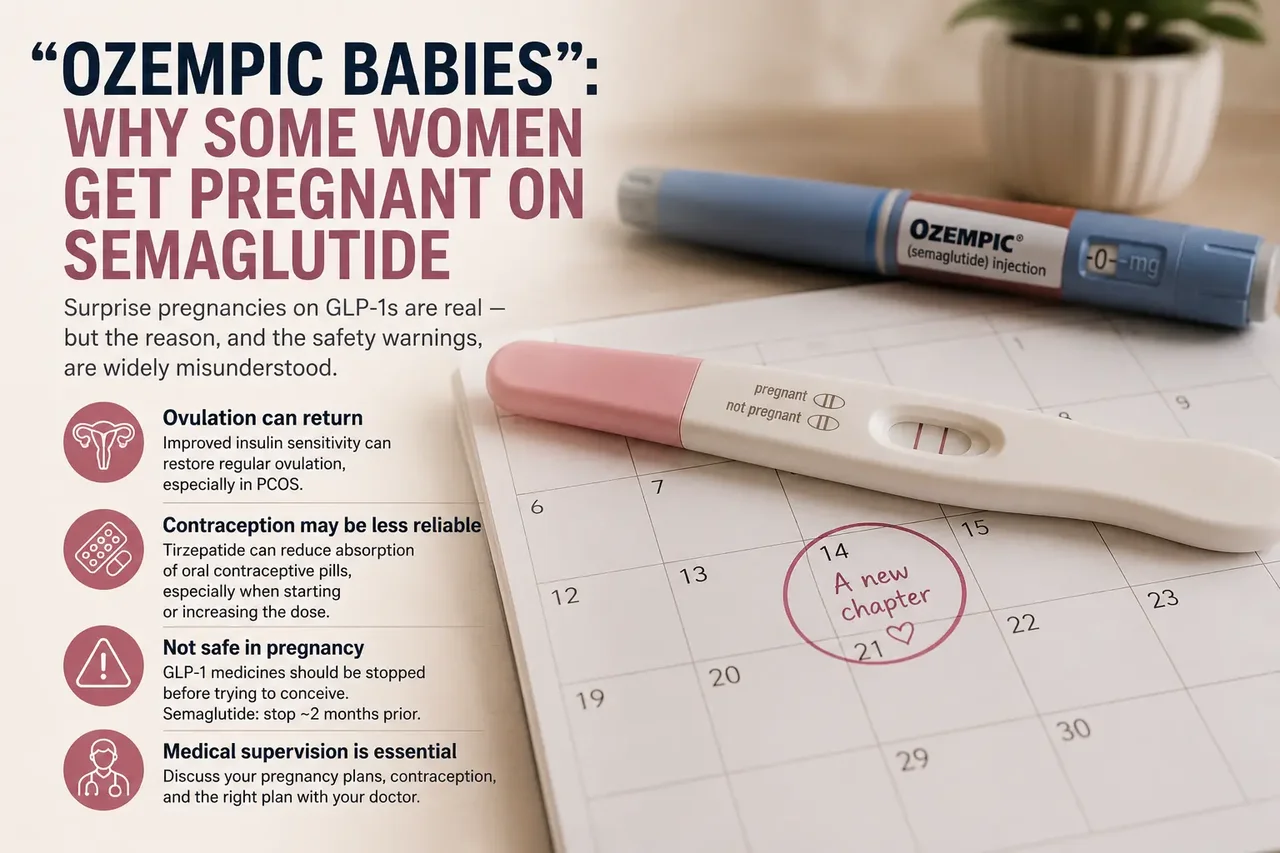
A strange pattern has surfaced alongside the GLP-1 boom: women who'd struggled for years to conceive, some told they likely couldn't, getting pregnant within months of starting semaglutide. The internet christened them "Ozempic babies." The phenomenon is real — but it's widely misunderstood, and the misunderstanding can be dangerous.
The main reason: ovulation comes back
The biggest driver isn't magic. It's metabolic. Many women with fertility struggles have PCOS, and PCOS is tightly linked to insulin resistance. When GLP-1 therapy drives weight loss and improves insulin sensitivity, it can restore the regular ovulation that had stalled for years. The body starts releasing eggs again — and pregnancy becomes possible. This is the same hormonal machinery behind the insulin resistance trap.
A second factor: contraception that stops working
There's also a drug-interaction angle, strongest with tirzepatide (Mounjaro): by slowing stomach emptying, it can reduce how well oral contraceptive pills are absorbed, especially when starting or increasing the dose. Combine "the pill works less reliably" with "ovulation just switched back on" and surprise pregnancies make complete sense.
The critical safety message
GLP-1 medicines are not fertility treatments, and they are not safe in pregnancy — they should be stopped before you try to conceive. Because semaglutide lingers in the body, doctors generally advise stopping it roughly two months before attempting pregnancy. If you can become pregnant and you're on a GLP-1, use reliable contraception (a non-oral method is worth discussing) and tell your doctor your plans.
Why this is an argument for supervision, not against the drug
None of this is a reason to fear GLP-1s — it's a reason not to take them unsupervised. A proper programme asks about pregnancy plans before you start, chooses contraception that won't be undermined, and has a clear off-ramp if you decide to try for a baby. That planning is exactly what gets skipped when someone buys a vial online.
If you have PCOS or are thinking about fertility, talk to an ALTRcare doctor before starting or stopping anything.
Frequently asked questions
Can semaglutide help me get pregnant?
It is not a fertility drug, but by improving weight and insulin sensitivity it can restore ovulation in some women, particularly those with PCOS. Any fertility plan should be managed by a doctor.
Is it safe to take Ozempic while pregnant?
No. GLP-1 medicines are not recommended in pregnancy and should be stopped beforehand — typically around two months before trying to conceive for semaglutide, on medical advice.
Does semaglutide affect birth control?
The clearest interaction is with tirzepatide, which can reduce absorption of oral contraceptives when starting or escalating the dose. Discuss a reliable, ideally non-oral, contraception plan with your doctor.
Ready to take the next step?
Take the free 2-minute eligibility assessment. A doctor reviews it before anything is prescribed, with no obligation.
This article is for general educational purposes and is not a substitute for personalised medical advice. GLP-1 medications are prescription-only and not suitable for everyone. Always consult a qualified doctor before starting, changing, or stopping any treatment.