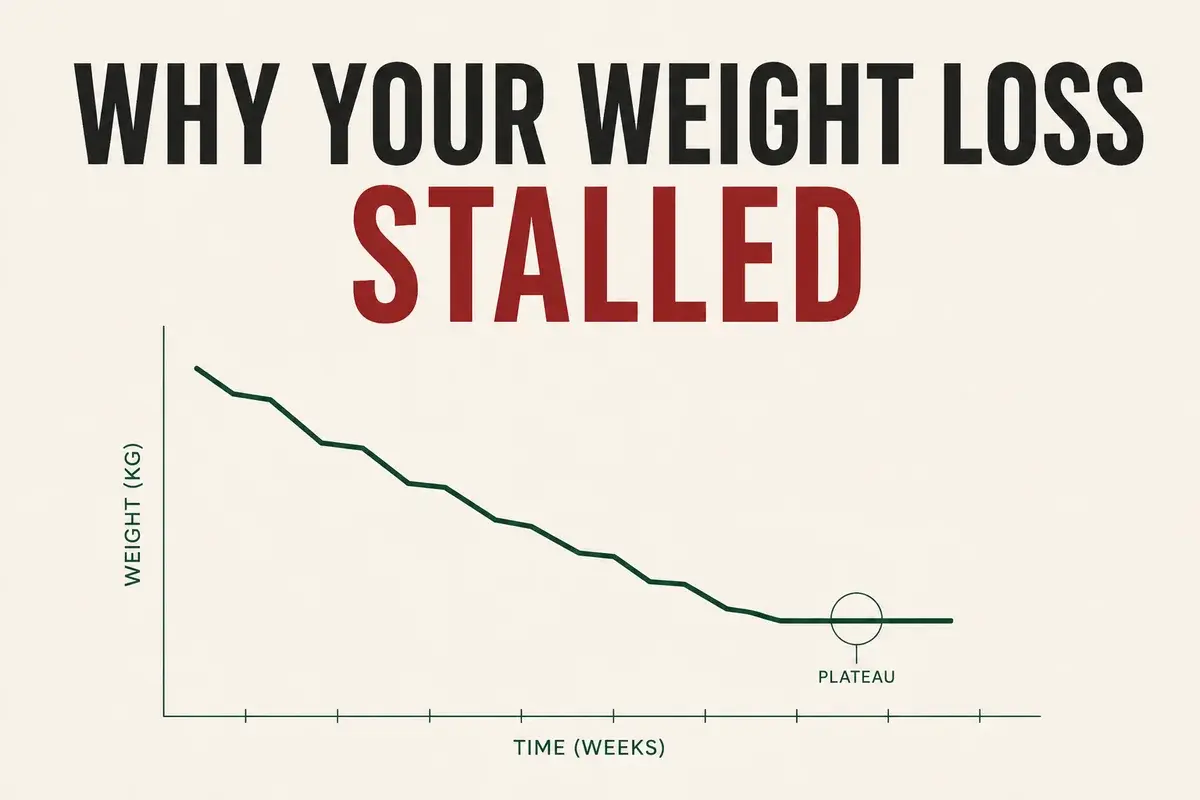
The Scale Is Lying to You: Fat, Muscle and Water Explained
Daily weight swings of one to two kilos are normal and have almost nothing to do with fat. Here is what the number is actually made of, and what to measure instead.
ALTRcare Medical Team
Clinical Editorial
The short answer: your weight on any given morning is fat plus muscle plus bone plus organs plus water plus undigested food. Fat is the only part you are trying to change, and it is the part that changes slowest. A one to two kilogram swing between days is almost always water and gut contents. If you react to it, you will make decisions based on noise.
What moves the number overnight
| Cause | Typical effect | How long it lasts |
|---|---|---|
| A salty meal out | Up 0.5 to 1.5 kg | One to three days |
| A high-carbohydrate day | Up 0.5 to 1 kg | One to two days |
| A hard new workout | Up 0.5 to 1 kg | Two to four days |
| Constipation | Up 0.5 to 1 kg | Until it resolves |
| The week before a period | Up 0.5 to 2 kg | Resolves after the period starts |
| A long flight or travel day | Up 0.5 to 1 kg | One to two days |
| Actual fat loss | Down slowly and unevenly | Visible over weeks, not days |
Why muscle complicates the picture
If you have started resistance training, especially as a beginner, you may gain a little muscle while losing fat. The scale then shows a smaller drop than the mirror and the measuring tape do. This is a good outcome being reported by a bad instrument. It is also why crash dieting without training can produce impressive scale numbers and a disappointing body: a meaningful share of that loss is muscle you will want back.
The old myth
Muscle does not weigh more than fat. A kilo is a kilo. Muscle is denser, so a kilo of it takes up less space, which is why measurements can shrink while weight holds steady.
How to weigh yourself properly
- Same time each day, first thing in the morning, after using the toilet and before eating or drinking.
- Same scale, same floor, hard surface not carpet, minimal clothing.
- Every day if you can handle it emotionally, and then look only at the weekly average. Daily numbers are noise; the average is signal.
- If daily weighing makes you anxious, weigh once a week on the same weekday instead. Consistency beats frequency.
What to track instead
- 1Waist circumference. Measure at the navel, standing, tape snug but not compressing, after a normal breath out. For South Asians, waist is a better health signal than BMI, and it responds to visceral fat loss.
- 2How clothes fit. Pick one specific pair of trousers, not a general impression.
- 3Photos. Same light, same spot, same clothes, once a month. Change you cannot see day to day is obvious across eight weeks.
- 4Strength and stamina. More reps, heavier weight, stairs without breathlessness. These are real and they precede visible change.
- 5Blood markers. HbA1c, liver enzymes, triglycerides and blood pressure often improve before the scale gets interesting.
About body composition machines
Bioimpedance scales and gym analysers estimate body fat by passing a small current through the body, and their readings are heavily affected by hydration. Use one machine consistently and watch the trend. Do not treat a single body fat percentage from a gym scale as a precise fact.
The three-week rule
Do not conclude anything about your plan from less than three weeks of data. Water shifts, hormonal cycles and training changes all operate on shorter timescales than fat loss does. If your weekly average has genuinely been flat for three or four weeks while your waist and measurements are also unchanged, that is a real plateau worth reviewing with your doctor or nutritionist.
Not sure where you stand?
ALTRcare's free 2-minute assessment gives you a doctor-reviewed read on your BMI, waist and metabolic risk, with no obligation to start anything.
Key takeaways
- Daily swings of one to two kilos are water and gut contents, not fat.
- Salt, carbohydrates, new workouts, constipation and the menstrual cycle all move the scale short term.
- Weigh at the same time under the same conditions, and read the weekly average.
- Waist measurement, photos, clothes fit and strength track fat loss better than weight alone.
- Give any judgement about your plan at least three weeks of data.
Frequently asked questions
Why did I gain a kilo overnight?
Almost certainly water and food volume. A salty dinner, a high-carbohydrate meal, a new workout or constipation can each add half a kilo to a kilo and a half that clears within a few days.
Should I weigh myself daily or weekly?
Either works if you are consistent. Daily weighing with a weekly average gives the clearest picture, but if the number affects your mood, weekly on a fixed day is better.
Are gym body fat machines accurate?
They are estimates and are sensitive to hydration, recent food and recent exercise. Use the same machine under similar conditions and watch the trend rather than trusting a single number.
My weight is stuck but my clothes fit better. What is happening?
You are most likely losing fat and gaining or maintaining muscle at the same time. This is a good outcome that the scale is poorly equipped to show.
Does weight change during the menstrual cycle?
Yes, commonly by half a kilo to two kilos in the days before a period due to fluid retention. It resolves on its own and should not be read as fat gain.
Ready to take the next step?
Take the free 2-minute eligibility assessment. A doctor reviews it before anything is prescribed, with no obligation.
This article is for general educational purposes and is not a substitute for personalised medical advice. GLP-1 medications are prescription-only and not suitable for everyone. Always consult a qualified doctor before starting, changing, or stopping any treatment.