Bariatric Surgery in India Explained: Sleeve, Bypass and Mini-Bypass
Four procedures make up almost all weight-loss surgery done in India. They differ in how much they restrict, how much they change absorption, and how reversible they are.
ALTRcare Medical Team
Clinical Editorial
The short answer: sleeve gastrectomy is the most common weight-loss operation in India and removes about three-quarters of the stomach. Roux-en-Y gastric bypass creates a small stomach pouch and reroutes the intestine, which adds a malabsorption effect and works particularly well for type 2 diabetes. Mini gastric bypass is a simpler, single-join version of the bypass. Adjustable gastric banding is now rarely done. All of them are metabolic operations, not just size reductions, because they change gut hormone signalling too.
Sleeve gastrectomy
The surgeon removes a large portion of the stomach along its outer curve, leaving a narrow tube. This restricts volume, and because the removed part produces much of the body's ghrelin, appetite falls too. It is a single operation on one organ with no rerouting, which is why it has become the default choice in most Indian centres. It is not reversible; the removed stomach is gone.
Roux-en-Y gastric bypass
A small pouch is created at the top of the stomach and connected directly to a lower segment of the small intestine, bypassing the rest of the stomach and the first section of intestine. This restricts intake, reduces absorption of some calories and nutrients, and produces strong hormonal changes. It has the longest track record and is often preferred where type 2 diabetes or severe reflux is a major part of the picture. It also carries the highest lifelong supplement requirement.
Mini gastric bypass
Also called one-anastomosis gastric bypass. A longer stomach tube is created and joined to the intestine at a single point rather than two, which makes the operation shorter and technically simpler. Results are broadly comparable to standard bypass in many series, with bile reflux being the main specific concern discussed. It has become common in India.
Adjustable gastric banding
A silicone band placed around the upper stomach, tightened or loosened via a port under the skin. It is reversible and was popular a decade ago, but weaker long-term results, band slippage and a high rate of eventual removal have made it uncommon in India today. Some patients still have one in place and may be considering conversion to another procedure.
| Procedure | How it works | Reversible | Supplements needed |
|---|---|---|---|
| Sleeve gastrectomy | Removes most of the stomach; restriction plus appetite hormone change | No | Moderate, lifelong |
| Roux-en-Y bypass | Small pouch plus intestinal rerouting; restriction, malabsorption, hormonal | Technically reversible, rarely reversed | High, lifelong and non-negotiable |
| Mini gastric bypass | Longer pouch, single join; similar mechanism, simpler operation | More easily revised | High, lifelong |
| Gastric band | External band restricting the upper stomach | Yes, removable | Low |
These are metabolic operations
The old view was that surgery works by making the stomach smaller. That is only part of it. Bypass procedures in particular change gut hormone signalling within days, which is why blood sugar often improves before meaningful weight is lost.
What recovery actually looks like
- Hospital stay is typically two to three days for a laparoscopic procedure without complications.
- Diet progression runs through clear liquids, full liquids, purees and soft food over roughly four to six weeks before normal textures return.
- Return to desk work is often two to three weeks; physical work takes longer.
- Follow-up is lifelong: bloods at intervals, a dietitian relationship, and supplements every day forever.
The risks, stated plainly
Bariatric surgery in experienced hands has a low mortality rate, comparable with other common abdominal operations, but it is major surgery. Specific risks include leaks at staple lines or joins, bleeding, blood clots, internal hernia after bypass, strictures, gallstones as weight drops, nutritional deficiencies, dumping syndrome after bypass, and reflux after sleeve. Volume matters: outcomes are better at centres and with surgeons who do this frequently.
How it compares with medication
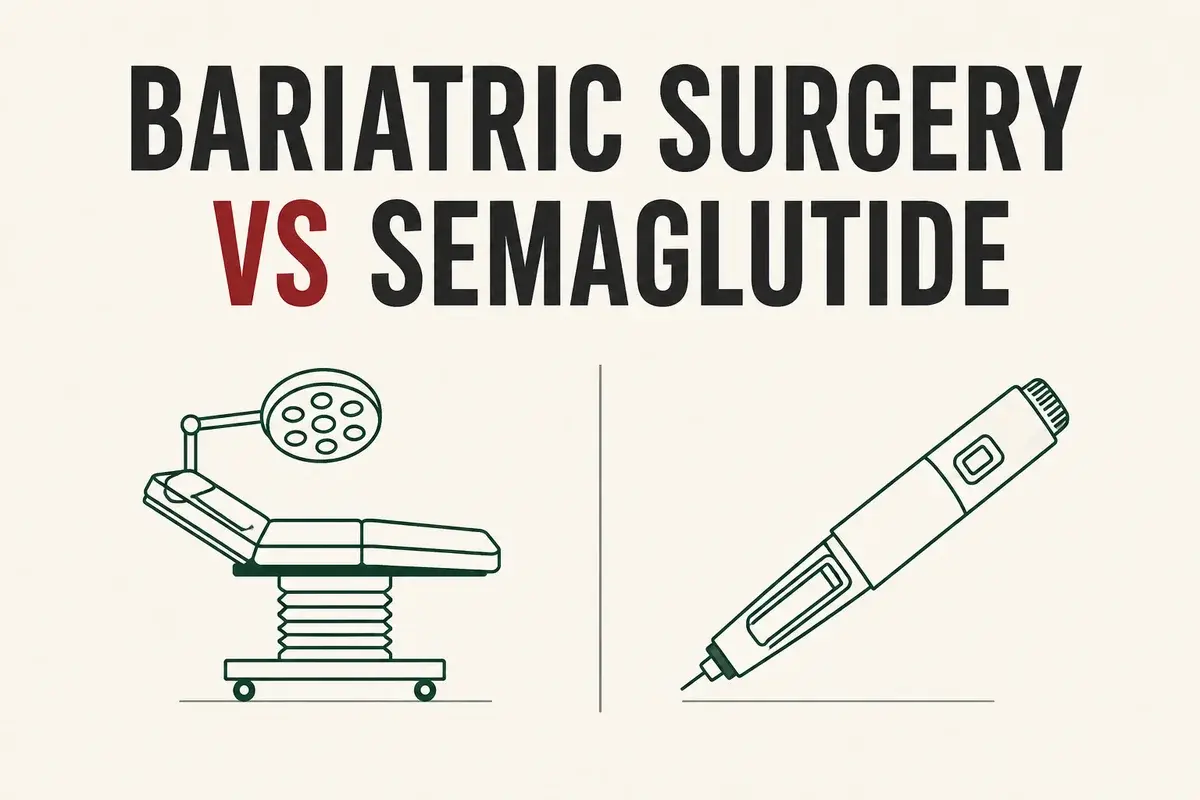
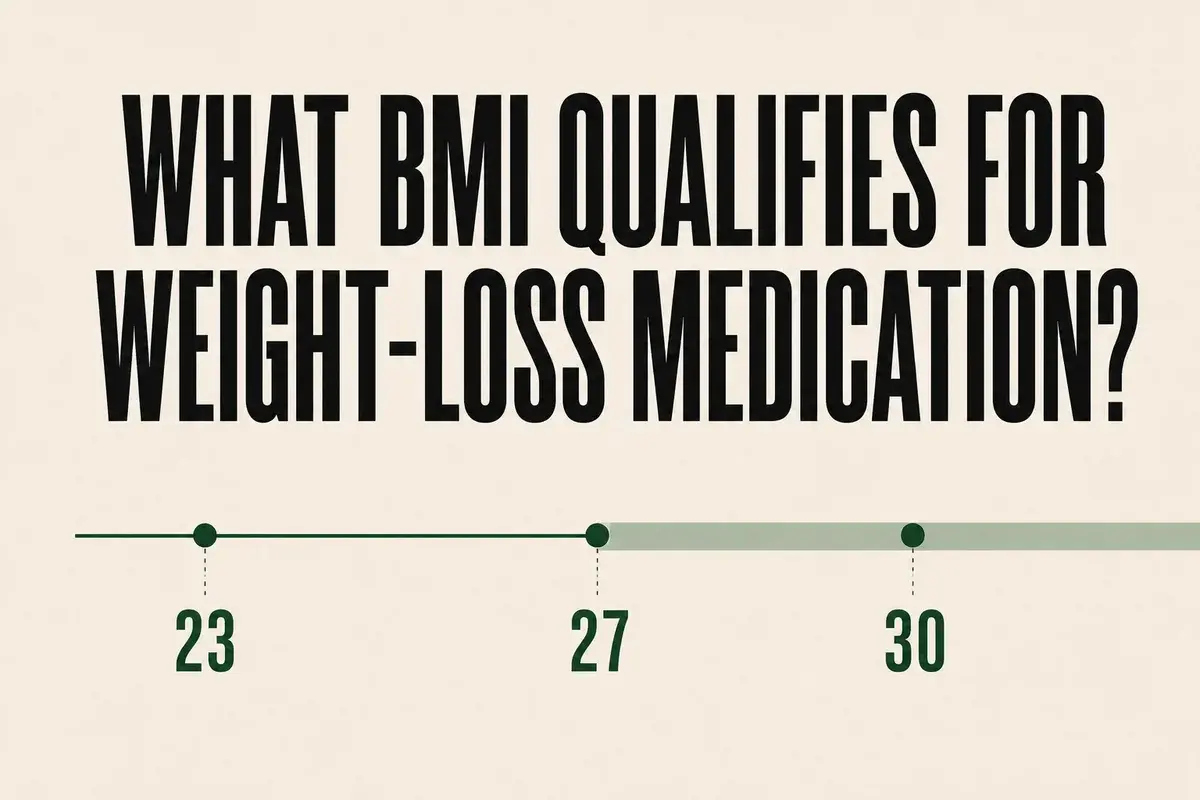
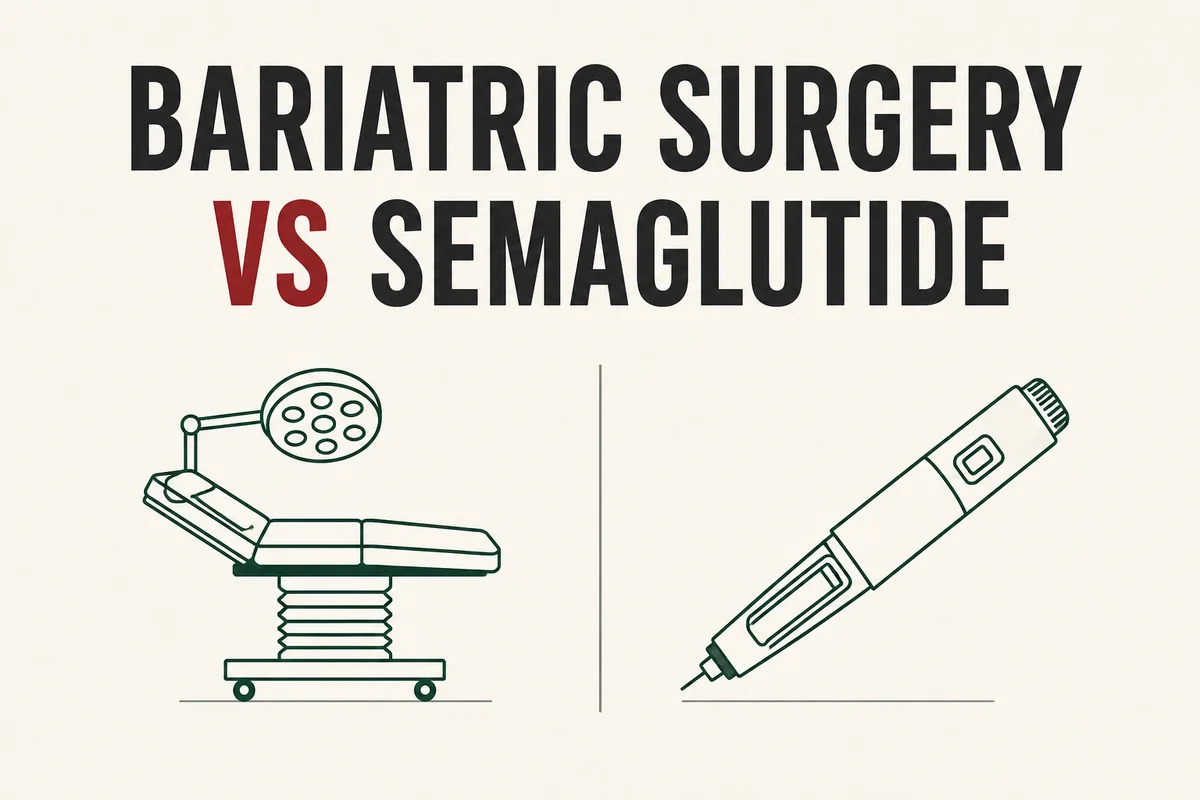
Surgery still produces the largest and most durable average weight loss of any obesity intervention, and it has the strongest evidence for diabetes remission. Medication has narrowed the gap and suits a much wider group of patients, particularly those in the BMI range below surgical criteria or unwilling to undergo an operation. Increasingly the question is not which is better but which is right for this patient now, and the two are sometimes used in sequence.
Not sure which route fits you?
ALTRcare's free 2-minute assessment gives you a doctor-reviewed read on where you stand. If surgery is the better answer for your situation, we will say so.
Key takeaways
- Sleeve gastrectomy is the most common weight-loss operation in India and is not reversible.
- Gastric bypass adds malabsorption and has the strongest diabetes evidence, with lifelong supplements.
- Mini gastric bypass is a simpler single-join version, now widely performed in India.
- Gastric banding is largely historical, with weaker long-term results.
- All bariatric procedures require lifelong follow-up, supplements and habit change.
Frequently asked questions
Which bariatric surgery is best?
There is no universal best. Sleeve suits many patients as a simpler single-organ operation; bypass is often preferred with significant type 2 diabetes or severe reflux. The choice depends on your BMI, conditions, eating pattern and surgeon's assessment.
Is bariatric surgery reversible?
Sleeve gastrectomy is not, because stomach tissue is removed. Bypass is technically reversible but rarely reversed. Only gastric banding is straightforwardly removable.
How long does recovery take?
Usually two to three days in hospital and two to three weeks before returning to desk work, with a staged diet progression over four to six weeks.
Will I need vitamins forever?
Yes, for all the malabsorptive procedures and to a lesser but still lifelong extent after sleeve. Skipping supplements after bypass causes serious deficiencies over years.
Can I have surgery if I am already on a GLP-1?
Yes, but your surgical team must know, because these medicines affect stomach emptying and therefore anaesthesia planning. Tell them well before the date.
Ready to take the next step?
Take the free 2-minute eligibility assessment. A doctor reviews it before anything is prescribed, with no obligation.
This article is for general educational purposes and is not a substitute for personalised medical advice. GLP-1 medications are prescription-only and not suitable for everyone. Always consult a qualified doctor before starting, changing, or stopping any treatment.